 简体中文

Panel Glue Application & Lamination Line Selection Guide: Systematic Matching from Adhesive Layer to Complete Production Line
Selection Guide for Glue Application & Lamination Production Lines: Systematic Matching from Adhesive Layer to Complete Production Line
The biggest difference between a glue application and lamination production line and a conventional cold-press lamination line is that it does more than simply press the panels together. It first applies adhesive to the substrate surface uniformly, accurately, and consistently, before the panels enter the pressing process.
Once the adhesive layer is uneven, the mixing ratio is inaccurate, or glue application is interrupted, even a cold press with stable pressure can still result in delamination, bubbling, warping, and other bonding defects. Therefore, when selecting equipment, you should not focus only on whether the line has a glue application function. Instead, you need to consider whether glue application, pressing, conveying, cleaning, and maintenance can work together as a stable and efficient system.
1. Confirm the Adhesive and Panel Materials First
The adhesive and panel materials are the first factors to determine the equipment configuration.
Different adhesives have significantly different requirements for glue application systems. Single-component adhesives, PUR adhesives, and water-based adhesives place greater emphasis on heating and temperature maintenance, curing prevention, automatic cleaning, and sealing of the adhesive circuit.
For two-component AB adhesives, the key factors are the dynamic mixing system and mixing-ratio accuracy. Excessive ratio deviation can lead to incomplete curing, poor bonding performance, or a brittle adhesive layer.
Panel types such as insulation panels, honeycomb panels, sandwich panels, door-core panels, and cabinet panels also have different requirements for glue application width, adhesive volume, conveying speed, and pressing cycle.
For large-format panels, the equipment needs a sufficiently wide glue application head and a stable conveying platform. For small-batch, multi-product production, it is better to choose a machine that allows quick parameter changes and adjustable glue application heads.
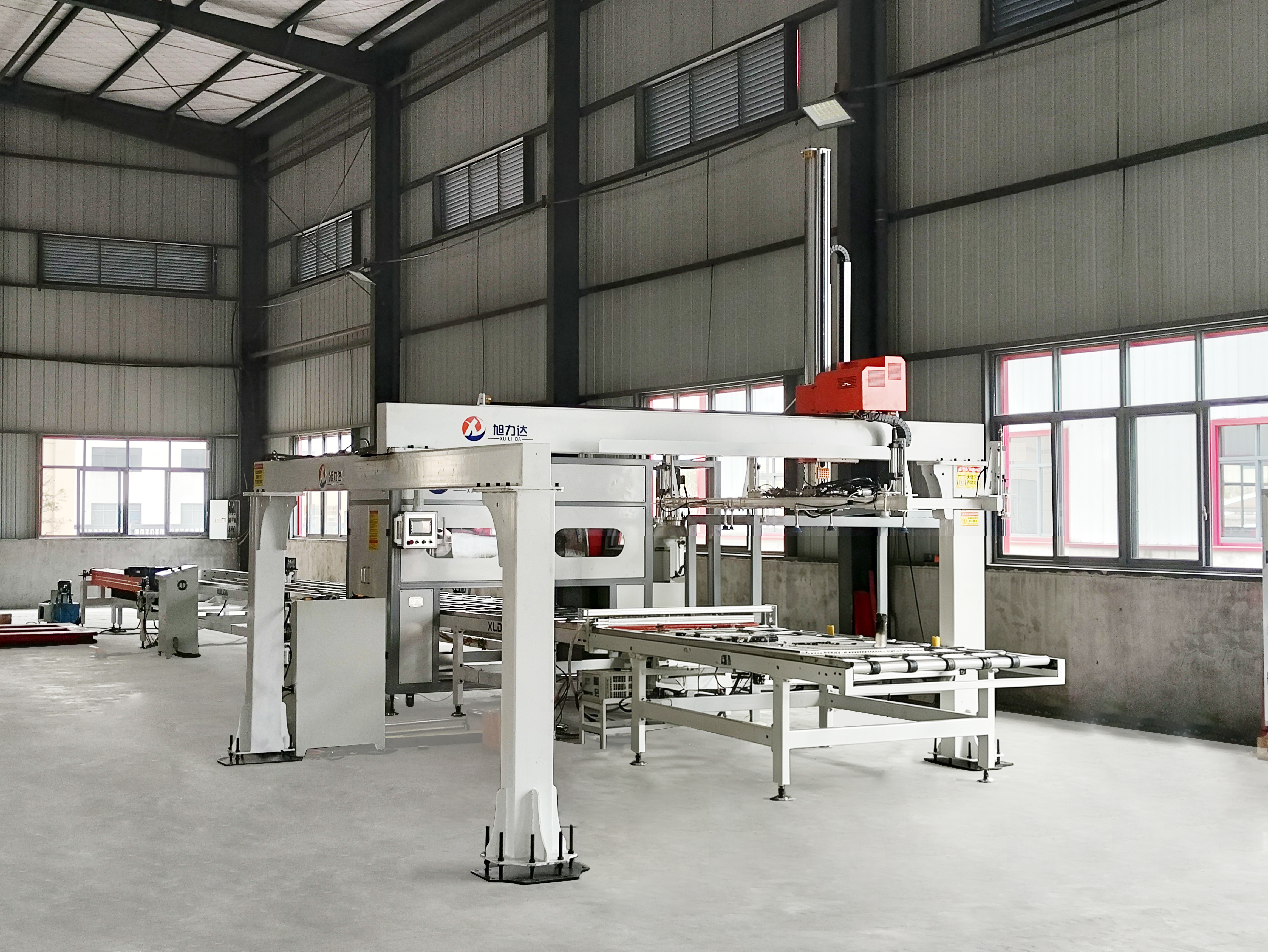
2. The Glue Application System Is the Core of the Production Line
The glue application system is the heart of the entire line. When selecting equipment, pay particular attention to the metering pumps, mixing system, glue application head, and adhesive volume control accuracy.
The metering pump determines whether the adhesive output remains stable. Gear pumps and screw pumps should be selected according to the viscosity of the adhesive.
For two-component adhesives, the mixing ratio accuracy must be confirmed. The ratio deviation should be kept within a low and controllable range to avoid fluctuations caused by manual adhesive preparation.
The glue application head should be capable of covering the required panel width while ensuring uniform application, continuous glue flow, and minimal dripping or leakage.
If production specifications vary frequently, it is preferable to select equipment with adjustable glue application width, reciprocating application, or multiple glue-head switching capabilities.
Functions such as automatic cleaning, anti-drip protection, low-glue alarms, and temperature-controlled adhesive circuits may appear to be auxiliary features, but they directly affect downtime and adhesive waste. In the long term, these functions can be more valuable than simply saving money on the initial equipment purchase.
3. The Pressing Process Must Be Matched with Glue Application
The pressing process cannot be considered separately from glue application.
After adhesive is applied, it has a limited open time. The panels must enter the pressing station within the specified time; otherwise, the bonding strength may decrease.
The pressure uniformity, working-table parallelism, and holding time of the cold press or lamination press must be properly matched with the glue application speed.
If glue application is fast but the pressing cycle cannot keep up, the adhesive may begin to cure before pressing. On the other hand, if the pressing pressure fluctuates significantly, localized insufficient pressure may occur even when the adhesive has been applied evenly.
Therefore, the production-line cycle should be calculated as an integrated system based on:
Glue application speed → conveying distance → pressing time → cooling and stabilization
Instead of purchasing several individual machines and attempting to integrate them on site afterward.
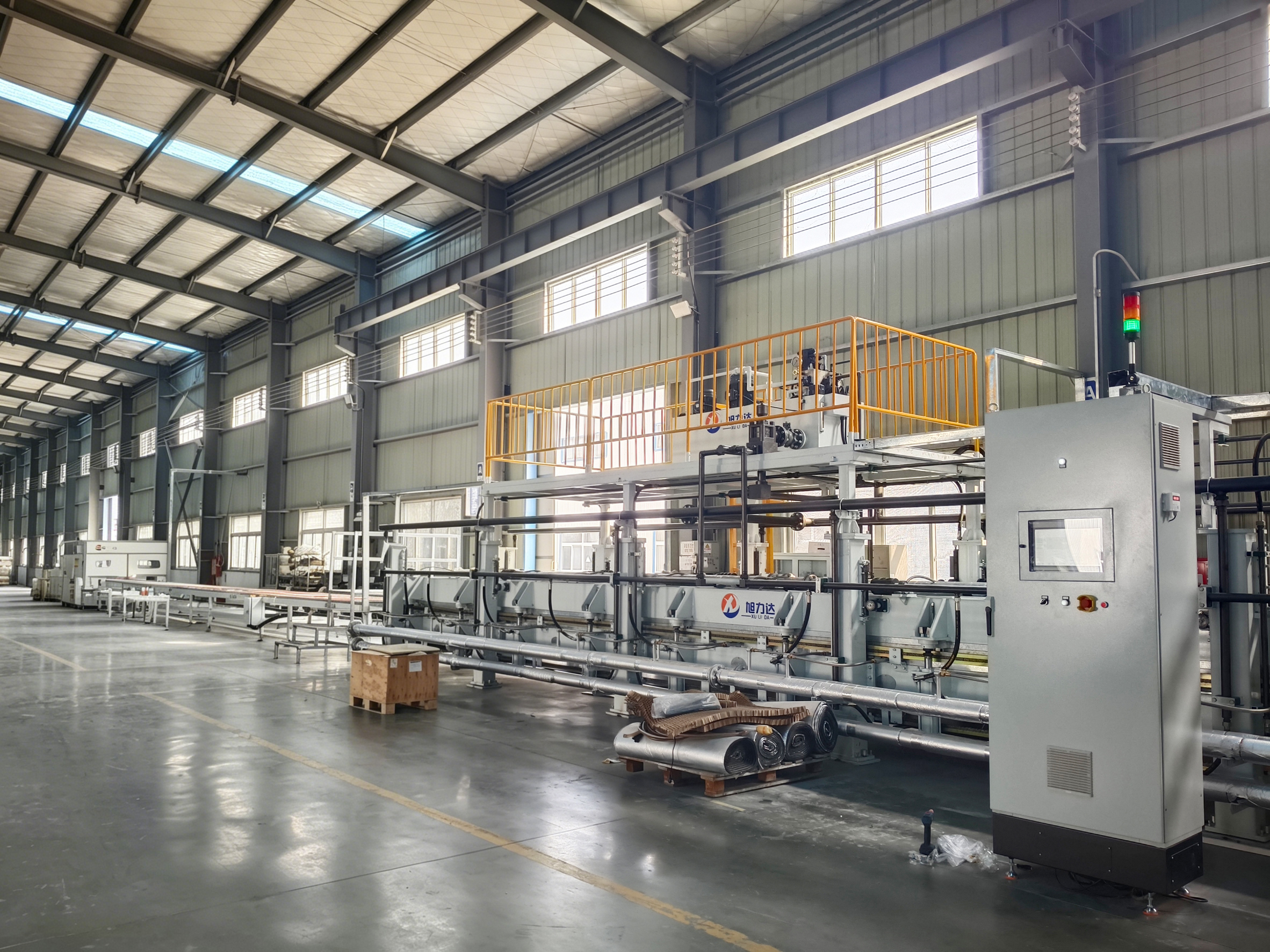
4. Choose the Right Level of Automation
The automation level should be selected according to production capacity and order structure.
A semi-automatic glue application and lamination line is suitable for small- and medium-sized production with frequent product changes. Operators handle loading and unloading, while the equipment performs quantitative glue application and pressing. This configuration requires a relatively lower investment and offers greater flexibility during production adjustment.
A fully automatic production line is more suitable for continuous production. It can typically integrate automatic loading, glue application, conveying, pressing, panel turning, stacking, and other processes.
This significantly reduces manual intervention and improves product consistency, but it also places higher requirements on factory layout, equipment coordination, and maintenance capabilities.
If current production capacity is relatively low but future expansion is planned, consider equipment with reserved interfaces for future upgrades. Automatic conveying, stacking, or other modules can then be added later, avoiding excessive initial investment.
5. Evaluate Equipment Stability Based on Real Working Conditions
Equipment stability should be evaluated based on the core components and actual operating conditions.
Do not focus only on terms such as “fully automatic” or “high precision” in promotional materials. Confirm the brands and materials of the control system, metering pumps, glue application heads, conveying system, hydraulic or pneumatic components, and other key parts.
Since glue application machines are continuously exposed to adhesives, the corrosion resistance and wear resistance of adhesive lines, valves, and seals are critical.
For pressing equipment, pay attention to machine-frame rigidity, pressure repeatability, and temperature-control stability.
Whenever possible, bring your own panels and adhesive for a machine test. Observe the equipment during continuous operation and check whether:
The adhesive layer remains uniform
The mixing ratio remains stable
Cleaning is convenient
Adhesive changes can be completed quickly
The equipment operates reliably over an extended period
6. Manufacturer Service Capability Is Equally Important
Glue application and lamination lines are often highly customized production systems. Installation and commissioning, operator training, parameter optimization, and after-sales support can all directly affect the time required to start production.
It is preferable to work with a source manufacturer that has:
Experience with similar panel applications
The ability to provide customized solutions
On-site installation and commissioning support
Reliable spare-parts supply
Fast technical response
Before purchasing, it is also recommended to verify the manufacturer's qualifications, actual customer references, and factory acceptance-testing procedures.
This helps avoid purchasing equipment that performs well only during sample demonstrations but lacks long-term stability in actual production.
7. Evaluate the Total Cost, Not Just the Machine Price
When comparing equipment, the most important factor is not simply the initial machine price. The total cost of ownership should also be considered.
The long-term operating cost of a glue application and lamination line mainly includes:
Adhesive waste
Cleaning and maintenance downtime
Labor requirements
Maintenance frequency
Rework and rejection rates
A production line with accurate adhesive control, convenient cleaning, and a properly matched pressing cycle may require a higher initial investment, but it can significantly reduce excess adhesive, insufficient glue application, rework, and production downtime.
The overall return on investment can therefore be much better.
Conclusion
Before selecting a glue application and lamination production line, first clarify the panel material, adhesive system, daily production capacity, product dimensions, and factory conditions.
Then ask the manufacturer to develop a complete production-line solution based on the actual production cycle. Finally, verify the solution through machine testing, focusing on adhesive-layer uniformity, mixing-ratio accuracy, production efficiency, and finished-panel bonding strength.
Only by evaluating the entire system—from adhesive application and conveying to pressing and final product quality—can you select a glue application and lamination production line that is truly reliable, efficient, and suitable for long-term production.
 How Is the After-Sales Service of a Direct Manufacturer of C
 Glue Spraying vs. Roller Coating: Key Differences in Adhesiv
 What is the difference between a standalone fully automatic
 Panel Laminating Equipment Accelerates Its Transition Toward