 简体中文

What is the difference between a standalone fully automatic glue spraying machine and a fully automatic integrated laminating production line?
In the processing of modern composite panels, such as honeycomb panels, refrigerated truck body panels, insulated sandwich panels, and cleanroom panels, both standalone fully automatic glue spraying machines and fully automatic laminating production lines are widely used. However, many customers find it difficult to distinguish between these two types of equipment when selecting the right solution.
Simply put, a standalone glue spraying machine is an independent production unit focused on adhesive application, while a fully automatic laminating production line integrates multiple production processes into one complete system, enabling continuous production from raw material feeding to finished panel unloading.
The main differences lie in equipment configuration, automation scope, production methods, investment costs, and suitable applications.
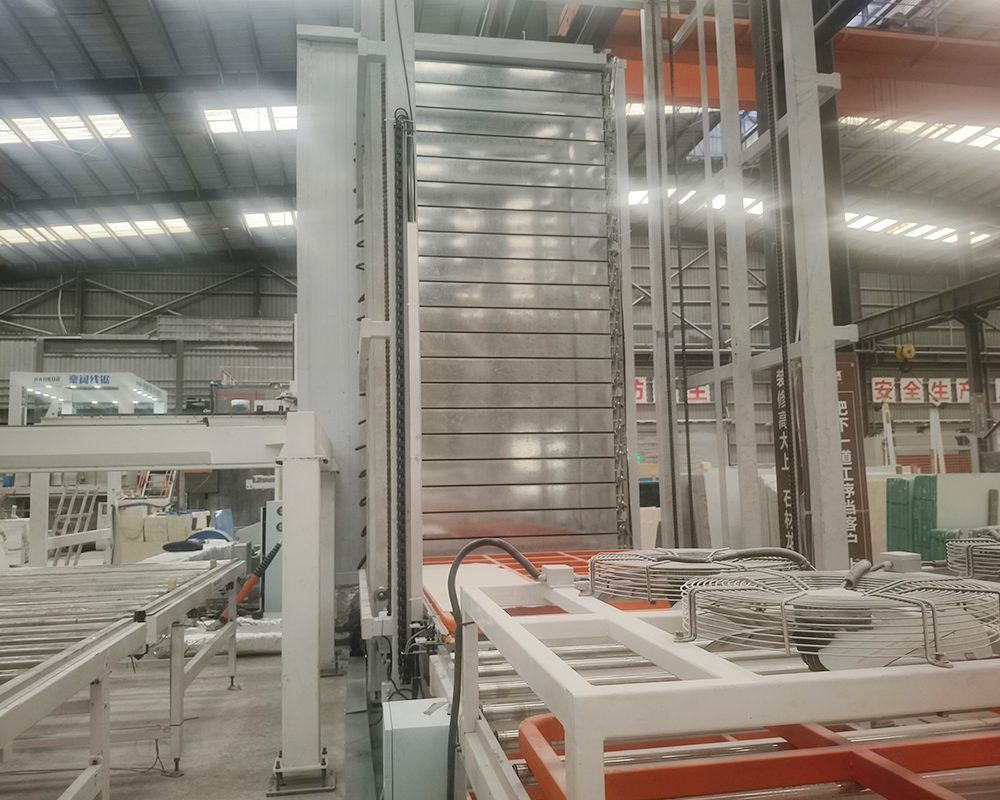
1. Standalone Fully Automatic Glue Spraying Machine
The core functions of a standalone fully automatic glue spraying machine focus on adhesive preparation, metering, mixing, and application.
The machine can be equipped with automatic A/B component proportioning, dynamic mixing, constant-temperature adhesive supply, servo-controlled glue spreading, and automatic cleaning functions.
It precisely controls adhesive thickness, dispensing speed, and spraying patterns, effectively solving common problems associated with manual glue application, such as uneven coating, excessive or insufficient adhesive, and unnecessary glue waste.
However, the machine is responsible only for the adhesive application process. Other operations, including panel loading, positioning, core material placement, pressing, curing, unloading, and material transfer, need to be completed manually or with additional equipment, such as presses and conveyor tables.
In actual production, this is generally an intermittent working process. Operators manually transfer the substrate to the glue spraying station. After adhesive application, the panel is transferred to a cold press or hot press for bonding. Waiting times may occur between different processes, and production coordination depends largely on operators.
Advantages:
Flexible equipment layout and relatively small floor space requirements.
Lower initial investment and easier installation.
Suitable for different panel sizes and product specifications.
Can operate independently or serve as the core unit for future production line upgrades.
Ideal for factories handling customized orders, small batches, and multiple product varieties.
For manufacturers with limited workshop space, relatively limited budgets, or frequent changes in product specifications, a standalone machine provides a cost-effective way to replace manual glue application and improve bonding quality.
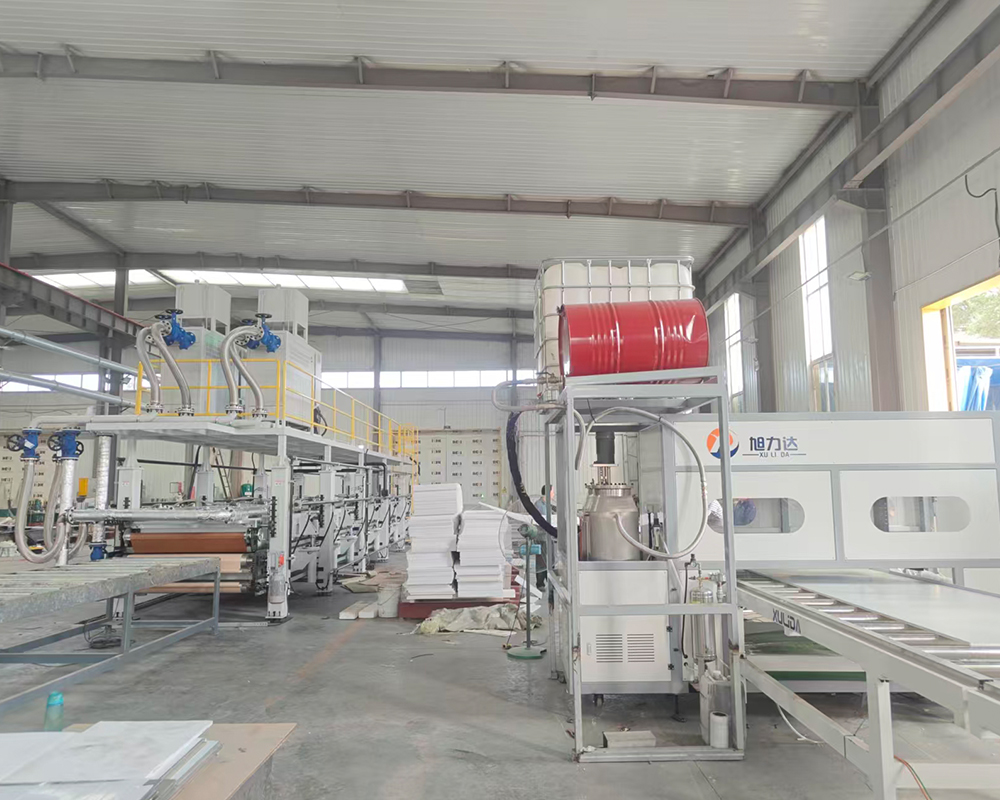
2. Fully Automatic Laminating Production Line
A fully automatic laminating production line is a complete integrated manufacturing system built around the glue spraying unit.
It can combine multiple modules, including:
Automatic loading system
Surface treatment equipment
Conveyor and positioning system
Automatic glue spraying system
Automatic panel and core material placement
Pressing and curing system
Online quality inspection
Edge trimming
Automatic unloading and stacking system
The entire production line is coordinated by a centralized control system. Conveyor speeds, glue spraying cycles, pressing pressure, and curing times are synchronized to ensure smooth and continuous production.
From raw material loading to finished panel unloading, materials are automatically transferred through the production line using vacuum suction systems, robotic handling equipment, and conveyor rollers.
Substrate positioning, core material placement, adhesive application, lamination, and pressing can all be integrated into one continuous production process.
This significantly reduces manual handling and minimizes problems such as panel damage, positioning errors, and adhesive contamination caused by manual operations.
Compared with a standalone machine, a fully automatic production line offers significantly higher production efficiency, more consistent product quality, and more stable bonding performance. It helps reduce common defects such as delamination, blistering, and poor adhesion.
It is particularly suitable for manufacturers handling large-volume, standardized orders that require stable and continuous production.
Additional modules, such as corona treatment, online quality inspection, and production data collection systems, can also be integrated to improve manufacturing management and quality control.
3. Differences in Investment and Maintenance
There are also significant differences in initial investment and daily operation.
Standalone Glue Spraying Machine:
Lower purchase cost.
Simple installation and commissioning.
Maintenance mainly focuses on adhesive supply lines, metering pumps, and servo-driven traveling mechanisms.
Easier adjustment when changing product specifications.
Greater flexibility for customized and small-batch production.
Fully Automatic Laminating Production Line:
Higher investment due to multiple integrated equipment modules.
Longer installation, commissioning, and layout planning periods.
Requires more workshop space and higher requirements for power supply, compressed air, and floor conditions.
Requires technicians familiar with the integrated conveying, pressing, and control systems.
Less flexible when frequently switching between customized, irregular, and small-batch orders once the production line configuration has been finalized.
4. How to Choose the Right Solution?
The key to selecting the right equipment is matching the production system with your order structure, production capacity requirements, and long-term development plans.
Choose a standalone fully automatic glue spraying machine if:
Your factory mainly handles customized and small-batch orders.
You produce panels in multiple sizes and specifications.
You want to reduce labor costs without making a large initial investment.
You prefer to upgrade your production equipment step by step.
You need greater flexibility in production arrangements.
Choose a fully automatic laminating production line if:
Your factory has stable, large-volume orders.
You mainly manufacture standardized panels.
You want to increase production capacity and reduce dependence on manual labor.
You require consistent product quality and stable bonding performance.
You plan to establish a long-term, large-scale manufacturing operation.
5. Upgrade Your Production Step by Step
Many manufacturers also choose a gradual upgrading strategy.
They initially purchase a standalone fully automatic glue spraying machine to improve their adhesive application process. Once production demand increases and orders become more stable, they can gradually add automatic loading systems, conveyors, pressing equipment, unloading systems, and other modules to upgrade the equipment into a fully integrated laminating production line.
This approach allows manufacturers to balance current investment costs with future production capacity requirements.
At Xulida, we provide both standalone automatic glue spraying machines and customized fully automatic laminating production lines. We can recommend the most suitable solution according to your panel materials, product dimensions, adhesive type, production capacity, and factory layout.
 How Is the After-Sales Service of a Direct Manufacturer of C
 Glue Spraying vs. Roller Coating: Key Differences in Adhesiv
 What is the difference between a standalone fully automatic
 Panel Laminating Equipment Accelerates Its Transition Toward