 简体中文
简体中文

A new revolution in sheet metal composites
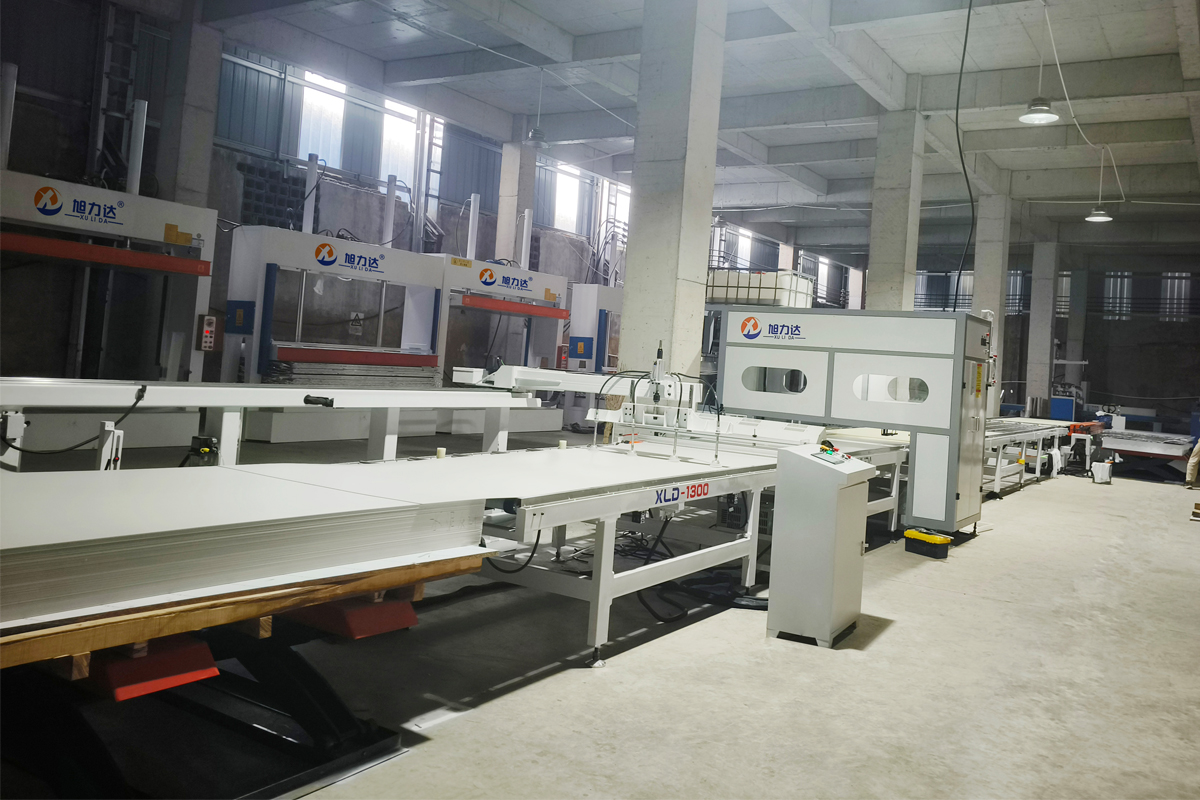
**Development Prospects of Glue Dispensing Machines**
The development prospects of glue dispensing machines (also known as adhesive dispensers or coating machines) are very broad overall. They are rapidly evolving toward **intelligence, high precision, flexibility, and sustainability**, with their fate closely linked to the upgrading of high-end manufacturing.
---
### **Core Drivers: Why is the Outlook Bright?**
1. **Continuous Expansion of Downstream Application Markets**:
* **Consumer Electronics**: Waterproofing, sealing, structural fixation, and chip packaging in smartphones, tablets, and wearables create huge and growing demand for high-precision micro-dispensing.
* **New Energy Vehicles**: Strongest current growth driver, including cell encapsulation and sealing, structural bonding and thermal potting of battery packs, and sealing of motors and electronic controls, and ADAS sensor assembly.
* **Semiconductors and Integrated Circuits**: Chip packaging (Underfill, Encapsulation), wafer-level packaging, SMT red adhesive, etc., requiring extremely high precision and cleanliness.
* **Medical Devices and Biopharmaceuticals**: Bonding of disposable medical consumables, micro-channel encapsulation for in-vitro diagnostic equipment, precision coating for drug delivery devices, demanding stringent hygiene and safety standards.
* **Photovoltaics and LED**: Sealing of PV modules, encapsulation of LED strips and displays, representing large market capacity.
2. **Inevitable Trend of "Machines Replacing Humans"**:
* Dispensing tasks are highly repetitive and require strict precision. Manual operation is prone to fatigue and inconsistency. Rising labor costs and higher product quality requirements make automated dispensing machines an inevitable choice.
3. **Intrinsic Demand for Technological Iteration**:
* Increasingly complex, miniaturized, and integrated product designs demand higher dispensing accuracy, speed, consistency, and complex 3D path planning, forcing dispensing technology to upgrade.
---
### **Major Future Development Trends**
1. **Intelligence and Integration**
* **Deep Integration of AI and Machine Vision**: Uses AI vision for precise positioning, defect detection, and path compensation (e.g., auto-correcting product misalignment, real-time inspection for presence/breaks/volume of adhesive, enabling 100% online inspection and closed-loop process control).
* **Industrial IoT and Datafication**: Dispensing machines act as nodes in smart factories, enabling data collection, monitoring, analysis, and predictive maintenance via cloud platforms. Managers can monitor equipment status remotely, optimize process parameters, and trace production data.
* **Ease of Use and Simplification**: Reduces the skill threshold and reliance on highly skilled engineers through user-friendly software interfaces, 3D visual programming, offline programming, etc.
2. **High Precision and High Speed**
* **Piezoelectric Jet Valve Technology**: Becoming mainstream. Non-contact, very fast (up to hundreds of dots per second), extremely precise (picoliter level), ideal for precision dispensing on micro-components.
* **Linear Motors and High-Precision Motion Platforms**: replace traditional ball screws and servos, offering higher motion precision, speed, and acceleration for complex 3D trajectories.
* **Constant Pressure and Temperature Control Systems**: Provide more precise control of adhesive pressure and temperature, ensuring consistent and stable discharge, especially for materials sensitive to temperature-induced viscosity changes.
3. **Flexibility and Modularity**
* **Quick Changeover Capability**: To adapt to flexible manufacturing trends ("high-mix, low-volume"), machines need to quickly switch dispensing valves, needles, and feeding systems, with one-click recipe changes via software.
* **Modular Design**: Manufacturers offer standardized platforms and rich optional modules (e.g., different valve types, vision systems, pressure pots, UV curing lamps), allowing flexible configuration based on specific needs, reducing costs and lead times.
4. **Broadening Material Compatibility**
* Machines need to handle a wider variety of fluids as new materials emerge, such as:
* **High-Viscosity Fluids**: Thermal greases, sealants.
* **Two-Component Materials**: Epoxies, polyurethanes, demanding better static/dynamic mixing technology.
* **Fluids with High Filler Content**: Challenging for valve wear resistance.
* **Biocompatible Adhesives**: Requiring equipment that is easy to clean and contamination-free.
5. **Sustainability and Energy Efficiency**
* Reduced equipment energy consumption.
* Technologies to reduce adhesive waste, like anti-drip valves, quantitative dispensing control.
* Use of greener cleaning solvents or solvent-free cleaning methods.
---
### **Challenges and Opportunities**
* **Challenges**:
* **High Technical Barriers**: Involves interdisciplinary knowledge (precision machinery, fluid dynamics, automation control, software algorithms, machine vision), creating high entry barriers for newcomers.
* **Cost Pressure**: Core components for high-end equipment (e.g., high-performance servo motors, precision sensors) remain costly.
* **Process Know-How**: Application processes vary greatly across industries and adhesives. Equipment providers need deep process expertise to offer complete solutions, not just sell hardware.
* **Opportunities**:
* **Domestic Substitution**: Chinese brands are advancing rapidly in technology, stability, and service, gradually capturing the high-end market previously dominated by foreign brands, with advantages in cost-effectiveness and service responsiveness.
* **Emerging Application Fields**: New sectors like new energy, AR/VR, and semiconductor localization offer fresh growth markets.
* **"Total Solution Provider"**: Transitioning from selling standalone equipment to providing total solutions encompassing hardware, process support, consumables, and after-sales service creates higher value and customer stickiness.
### **Conclusion**
Glue dispensing machines have evolved from simple automation equipment into **core units of smart manufacturing and precision fluid control**. Their development prospects are synchronized with the global wave of manufacturing upgrading. In the future, companies that can build advantages in **intelligence, precision, flexibility, and understanding of processes in emerging industries** will dominate this opportunity-rich market. For users, investing in advanced dispensing equipment is a key step to enhancing product quality, production efficiency, and competitiveness.
 Iterative advancements in adhesive application technology an
 Roundup of Major News in the Sheet Composite Equipment Indus
Technology Upgrading Accelerates, Green Smart Manufacturing
Roundup of Major News in the Sheet Composite Equipment Indus
Technology Upgrading Accelerates, Green Smart Manufacturing
 What is a curtain coating machine?