 简体中文
简体中文

Fully Automatic Coating and Laminating Production Line for Exterior Insulation Panels: Redefining Building Energy Efficiency
In the field of exterior wall insulation, production efficiency and product quality directly determine a company's market competitiveness. Traditional semi-automatic or manual coating and laminating methods have long faced issues such as low efficiency, inconsistent quality, and high labor costs. The emergence of fully automatic coating and laminating production lines is driving industry upgrades with unprecedented advantages.
1. Leap in Production Efficiency, Significant Capacity Increase
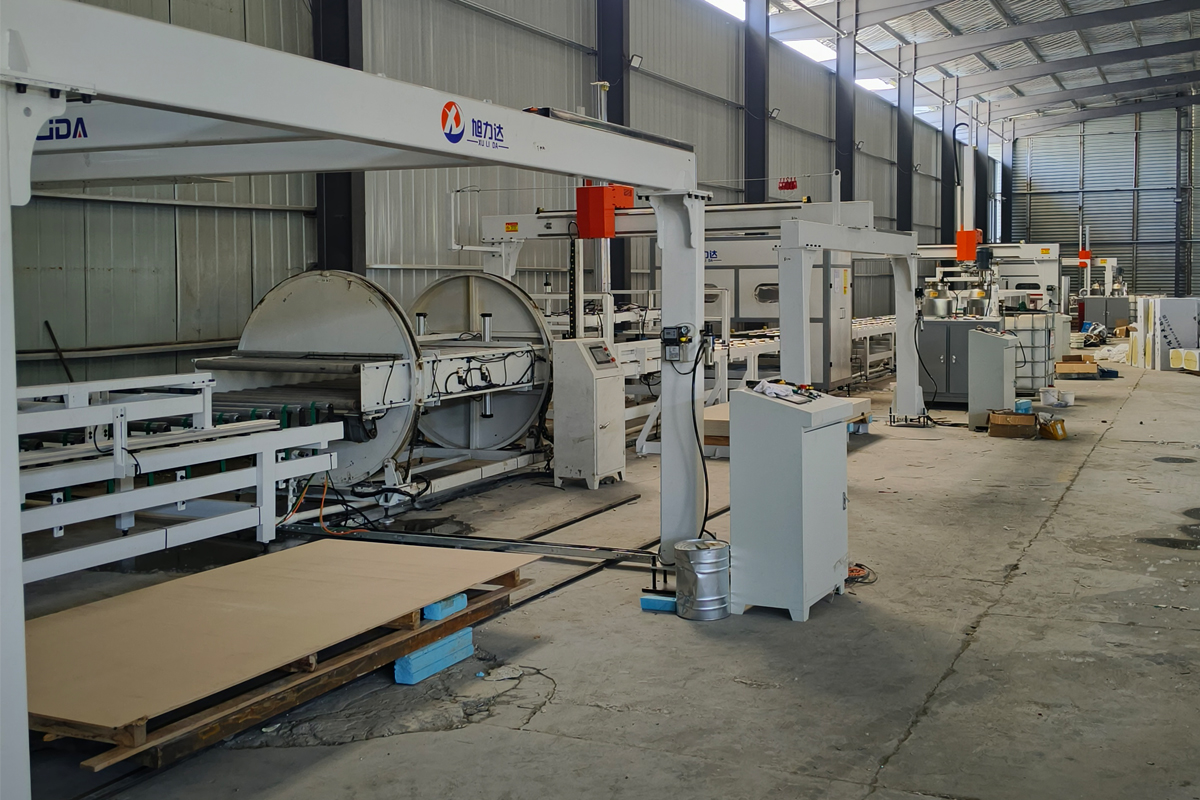
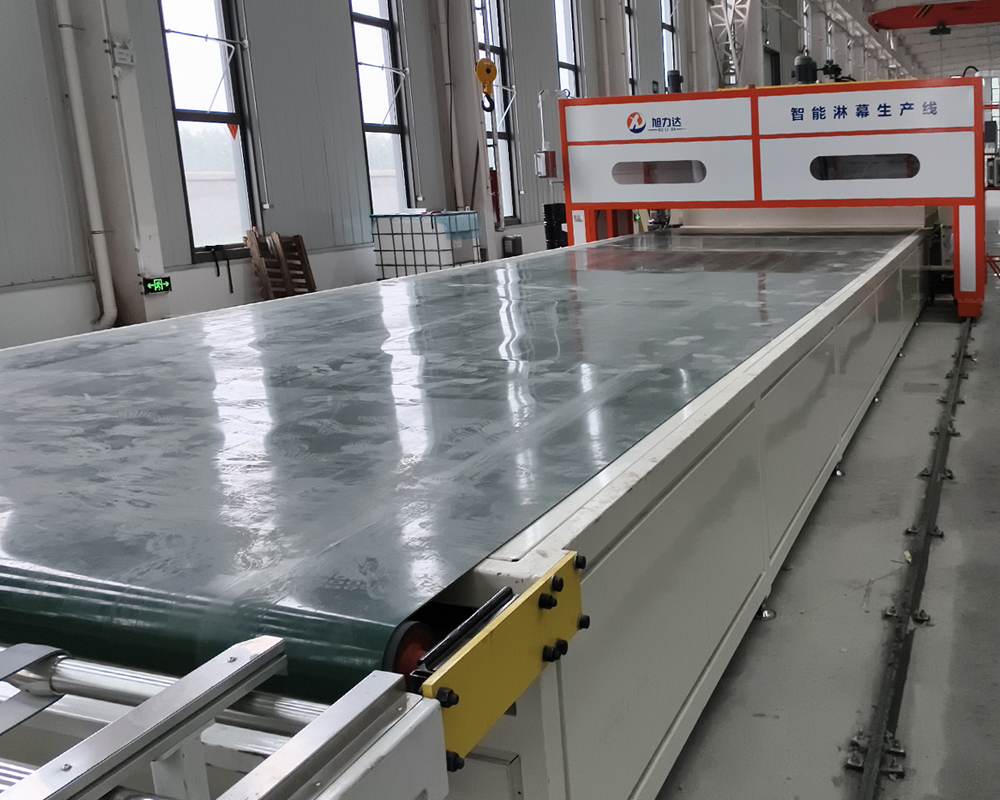
Fully automatic production lines achieve seamless integration of the entire process—from feeding, gluing, fabric laying, laminating, cold pressing, to automatic stacking. The entire line's speed can be precisely controlled, enabling continuous operation. Single-shift output far exceeds that of traditional segmented processes. Without the need to wait for manual material changes or workstation adjustments, the equipment can run 24/7, helping companies quickly respond to large and urgent orders and seize market opportunities.
2. Uniform and Precise Gluing, Stable Panel Quality
Manual or semi-mechanical gluing often suffers from uneven adhesive application, missed spots, and sagging, leading to delamination and hollow spots between the insulation board and the facing layer. Fully automatic lines use high-precision metering pumps and closed-loop control systems, keeping adhesive application error within a very small range. The reciprocating motion of the glue applicator head is automatically synchronized with the conveyor belt speed, ensuring consistent adhesive layer thickness and neat edges on every board. This uniformity not only enhances the bonding strength of insulation panels but also significantly extends the service life of the exterior wall system.
3. Reliable Lamination, Reduced Rework Risk
The integrated pressing section uses multi-stage roller pressing or continuous cold pressing, ensuring uniform pressure and controlled dwell time. This allows the insulation core material and facing materials (such as calcium silicate boards, aluminum foil, fiberglass mesh, etc.) to fully bond, eliminating bubbles and weak adhesion. Compared to manual pressing or simple rollers, the automated lamination achieves much higher peel strength, effectively preventing delamination or edge warping during transportation or installation, greatly reducing after-sales rework costs.
4. Substantial Labor Savings, Lower Overall Costs
A fully automatic coating and laminating line typically requires only 2–3 operators and inspectors, whereas a traditional line with the same capacity might need 10–15 workers. Given the rising trend in labor costs, the labor reduction from automation is highly significant. Moreover, machine operations do not depend on skilled worker expertise, so the impact of employee turnover on production is nearly zero. In the long run, the equipment investment is usually recouped within one and a half to two years through labor savings and improved yield rates.
5. Intelligent Control System, Flexible and Traceable Production
Modern fully automatic lines come standard with PLC and touchscreen control systems, capable of storing process parameters (adhesive amount, speed, pressure, temperature, etc.) for hundreds of different insulation panel specifications. When switching production, operators can recall a recipe with one touch without repeated trial runs. The system also monitors adhesive volume, panel position, and alarms in real time, and generates production reports for management quality traceability and energy efficiency analysis. Some high-end models also support remote maintenance and MES system integration, helping factories move toward digital management.
6. Environmentally Friendly, Aligned with National Policies
Fully automatic coating equipment typically uses enclosed glue applicator heads and circulation systems, significantly reducing adhesive evaporation and dripping, and lowering workshop odor and VOCs emissions. The integrated automatic cleaning device allows quick adhesive type changes without wasting cleaning agents. Additionally, the equipment's energy consumption is optimized, saving about 15–25% compared to older machines. With policies promoting green building materials and environmentally friendly production, this production line helps companies successfully pass environmental assessments and cleaner production audits.
7. Adaptable to Various Panel Types and Laminating Processes
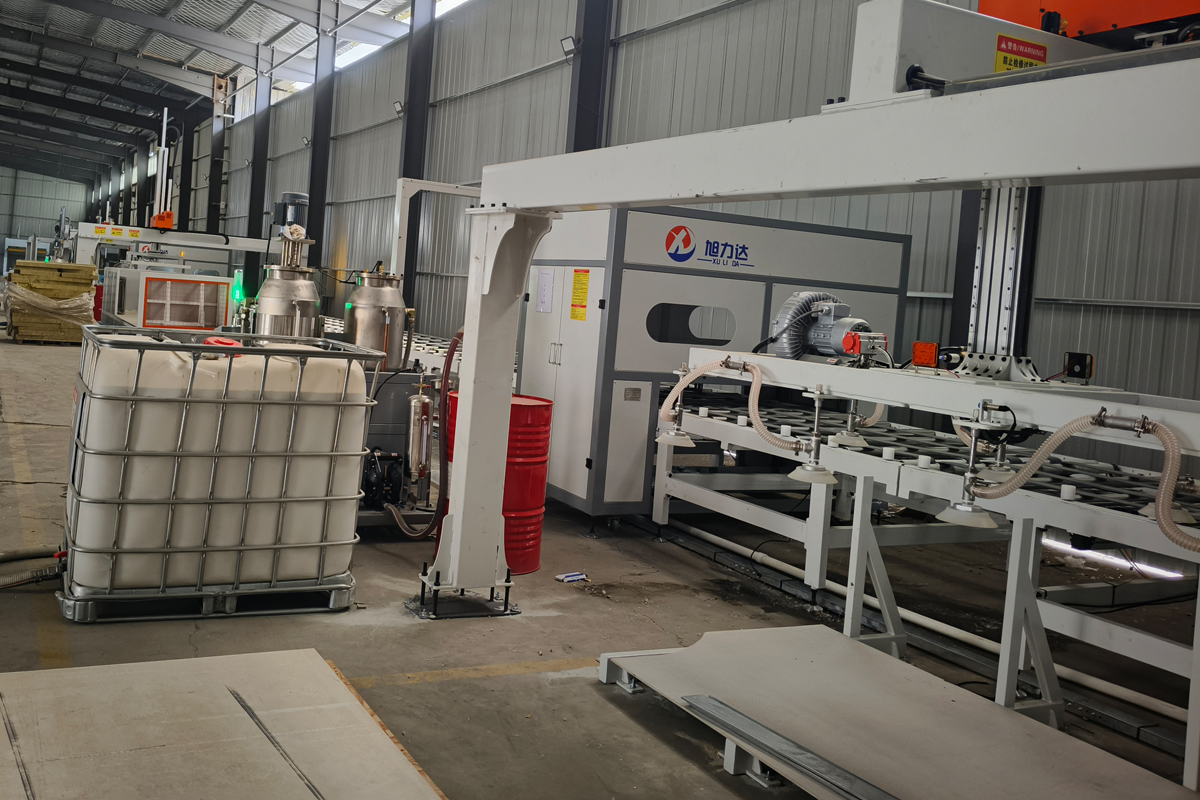
A high-quality fully automatic line can handle not only common insulation materials such as rock wool boards, EPS/XPS boards, polyurethane boards, and GPES permeable boards, but also various facing materials including aluminum plates, fiber cement boards, and magnesium oxide boards. By changing the glue applicator head and adjusting the pressing method, it can also be extended to produce insulated decorative integrated panels, lightweight partition boards, and other derivative products—enabling multiple uses with one machine and reducing equipment investment for multiple product lines.
8. Reduced Material Waste, Higher Profit Margins
Manual gluing often leads to adhesive waste; excessive application not only increases costs but may also cause board deformation. The precise adhesive supply system of a fully automatic line achieves over 98% adhesive utilization, while also reducing scrap and rework. Furthermore, the line's low-material alarm and glue break protection prevent the production of large numbers of defective boards due to empty adhesive barrels or clogged lines. These small material savings accumulate into significant profit gains in mass production.
Conclusion
The fully automatic coating and laminating production line for exterior insulation panels is far more than a simple replacement of manual labor with machines. It is a comprehensive solution covering coating, laminating, control, cleaning, and data management. It helps companies achieve higher efficiency, better quality, lower costs, and environmentally compliant production. For insulation material companies aiming to build long-term competitive advantages, adopting such a production line is a critical step toward intelligent and high-end manufacturing.
 Iterative advancements in adhesive application technology an
 Roundup of Major News in the Sheet Composite Equipment Indus
Technology Upgrading Accelerates, Green Smart Manufacturing
Roundup of Major News in the Sheet Composite Equipment Indus
Technology Upgrading Accelerates, Green Smart Manufacturing
 What is a curtain coating machine?