 简体中文
简体中文

How to choose between a glue spreader and a roller coater?
Here's the English translation of the provided text:
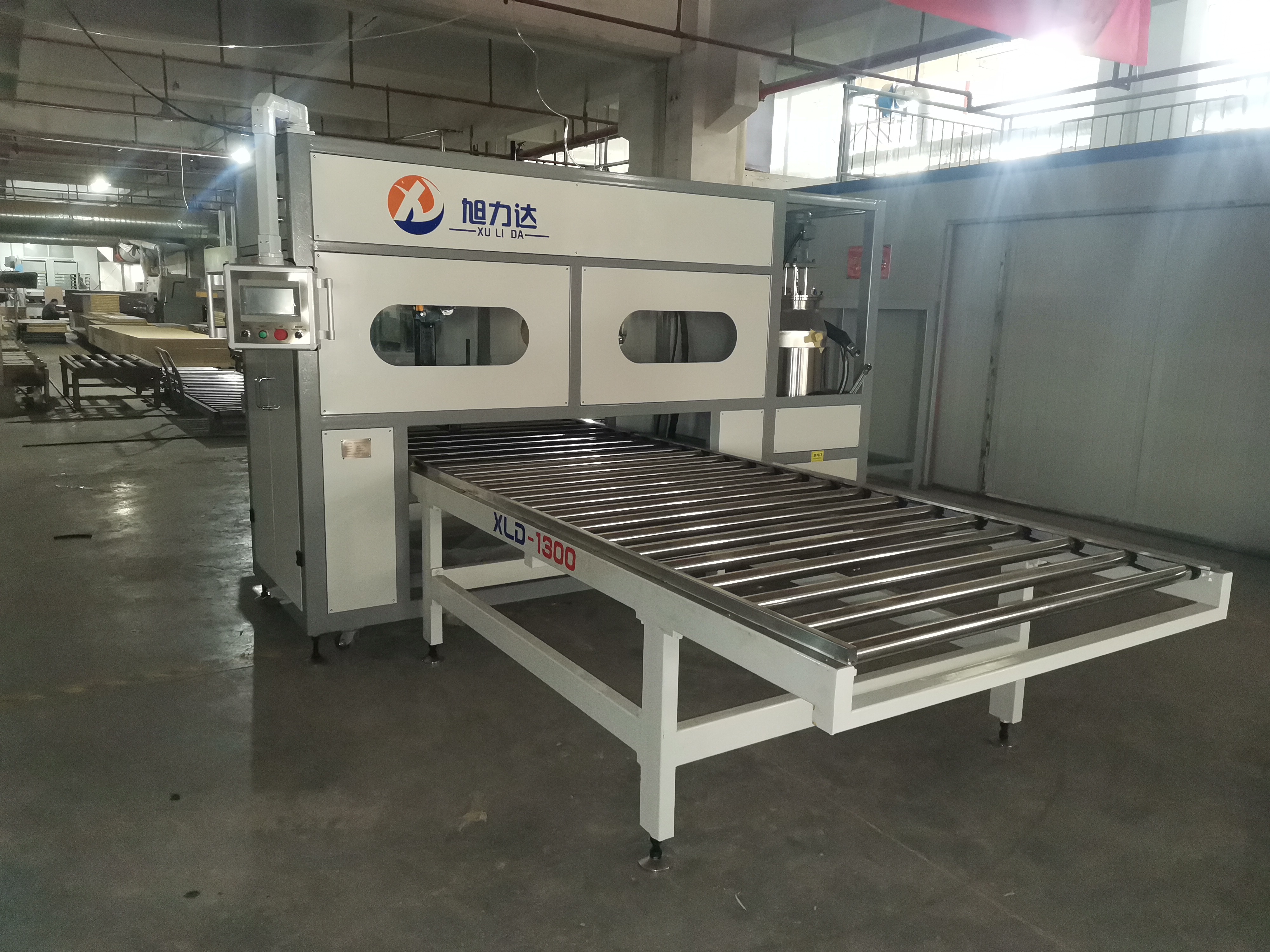
For panel lamination, the glue spreading (curtain coating) process offers significant advantages over the roller coating process in several key performance indicators, making it particularly suitable for high-quality, special-shaped, or wide panels. Below is an analysis of the core advantages of the glue spreading process:
1. Superior Coating Uniformity and Quality Stability
Glue spreading uses a temperature- and pressure-controlled metering system to apply adhesive evenly across the panel surface in a waterfall-like curtain, with no mechanical contact. This avoids the uneven glue distribution, localized dry areas, or edge overflow that can result from roller wear, deformation, or improper adjustment in roller coating. Especially on large or wide panels, glue spreading achieves micron-level consistency in glue layer thickness across the entire panel, effectively eliminating bubbles and dry spots, thereby ensuring superior peel strength and durability after lamination.
2. Suitability for Complex Substrates and Low-Weight Coating
Glue spreading is highly compatible with honeycomb panels, corrugated panels, and boards with grooves or embossed textures. The adhesive flows naturally by gravity into micropores, without the need for forced pressure from rollers. Additionally, glue spreading enables precise low-weight coating of 50–80 g/m² (roller coating typically requires 120–150 g/m² or more), significantly reducing adhesive costs while maintaining bonding strength and lowering the risk of solvent residue.
3. Prevents Substrate Damage and Deformation
Roller coating requires pressure between the roller and the panel, which can easily cause thin panels (e.g., aluminum sheets, thin MDF) to bend, surface microstructures to collapse, or soft materials like prepregs to deform. Glue spreading is a non-contact process with zero pressure on the substrate, making it especially suitable for fragile or low-rigidity panels such as prepregs, aramid paper honeycomb, and cork, completely eliminating the risk of crushing or deformation.
4. Significant Environmental and Cleaning Advantages
Glue spreaders feature a fully enclosed glue tank and sealed circulation lines, resulting in minimal VOC emissions. The spreading head can automatically return to zero and is drip-proof, and glue changes and cleaning take just a few minutes (roller coating requires hours to disassemble and clean rollers). Glue spreading also involves no splashing or slinging, providing a far cleaner working environment compared to the open glue tank and edge buildup typical of roller coating.
5. High Automation and Low Scrap Rate
Glue spreading easily integrates closed-loop online thickness measurement for real-time flow adjustment, ensuring a consistent glue layer. During startup or shutdown, adhesive is diverted via a return valve without contaminating the panel, resulting in minimal waste at the head and tail (only a few hundred millimeters). In contrast, roller coating tends to cause impact between the roller and panel and glue buildup during starts and stops, leading to multiple scrap panels—a clear disadvantage in small-batch or frequent changeover scenarios.
6. Lower Maintenance Costs and Greater Production Flexibility
Glue spreaders have no consumable contact parts like rubber rollers or doctor blades; the core components are stainless steel spreading heads and metering pumps, offering long maintenance intervals. Changing panel widths requires only adjusting glue stops (or servo centering), with no need to replace rollers. The process also allows quick switching between single- and double-side spreading, offering flexibility for complex orders.
Typical applications where glue spreading is recommended:
· Lamination of honeycomb panels (aluminum/aramid paper/plastic) with skins
· Extra-wide (>2 meters) or extra-long panels
· High-pressure laminates (HPL) and prepreg panels
· High-appearance decorative panels requiring zero defects and zero indentations
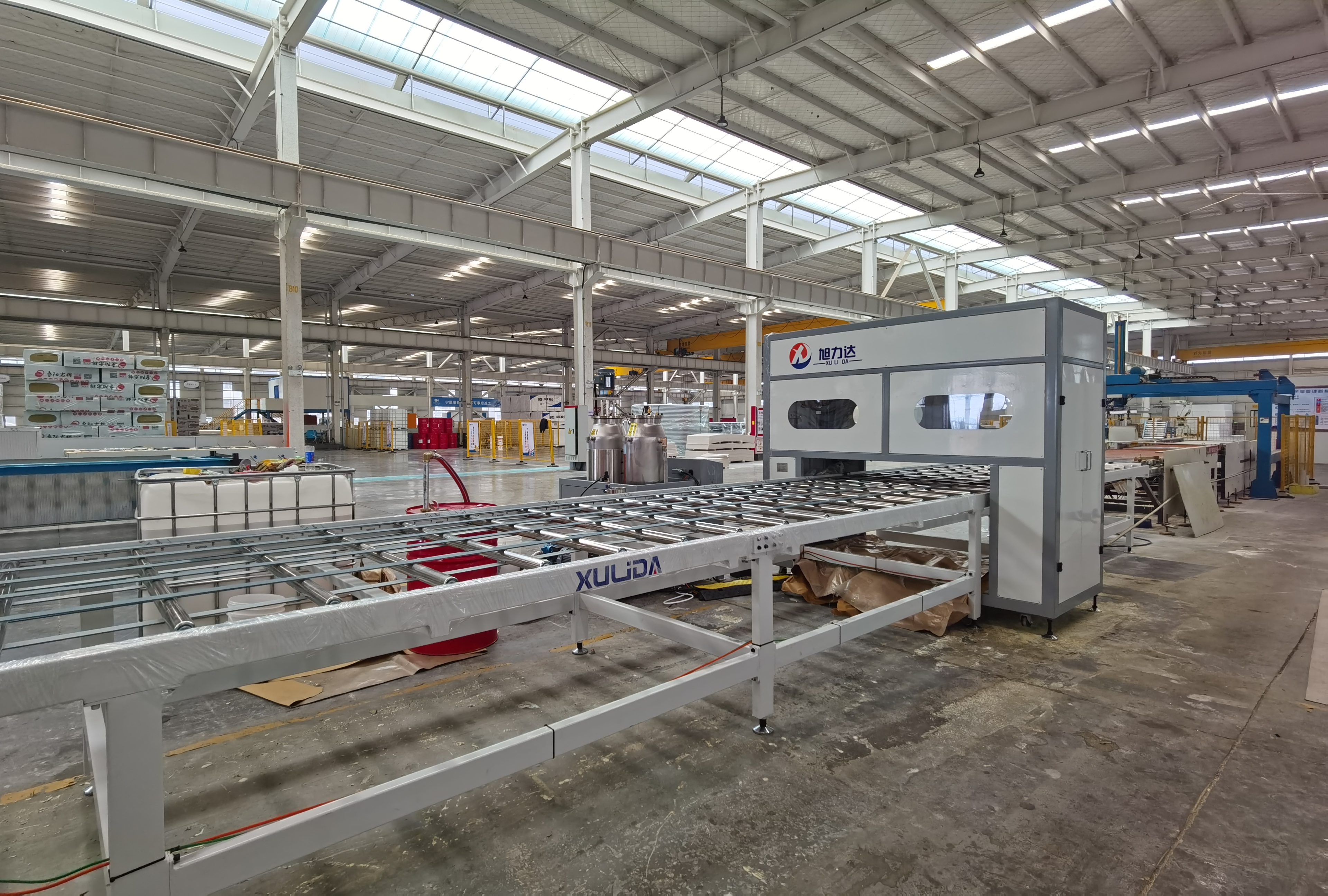
Considering yield rate, adhesive savings, and labor/maintenance costs, the total cost of glue spreading is often lower in medium-to-large-scale production.
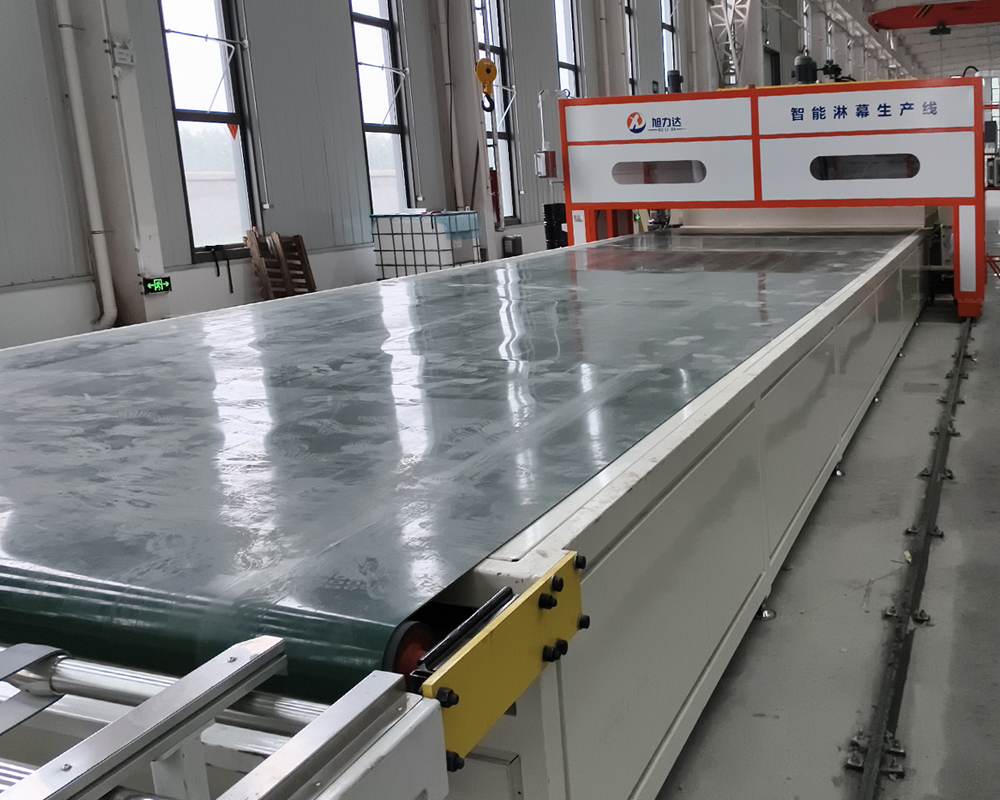 What is a curtain coating machine?
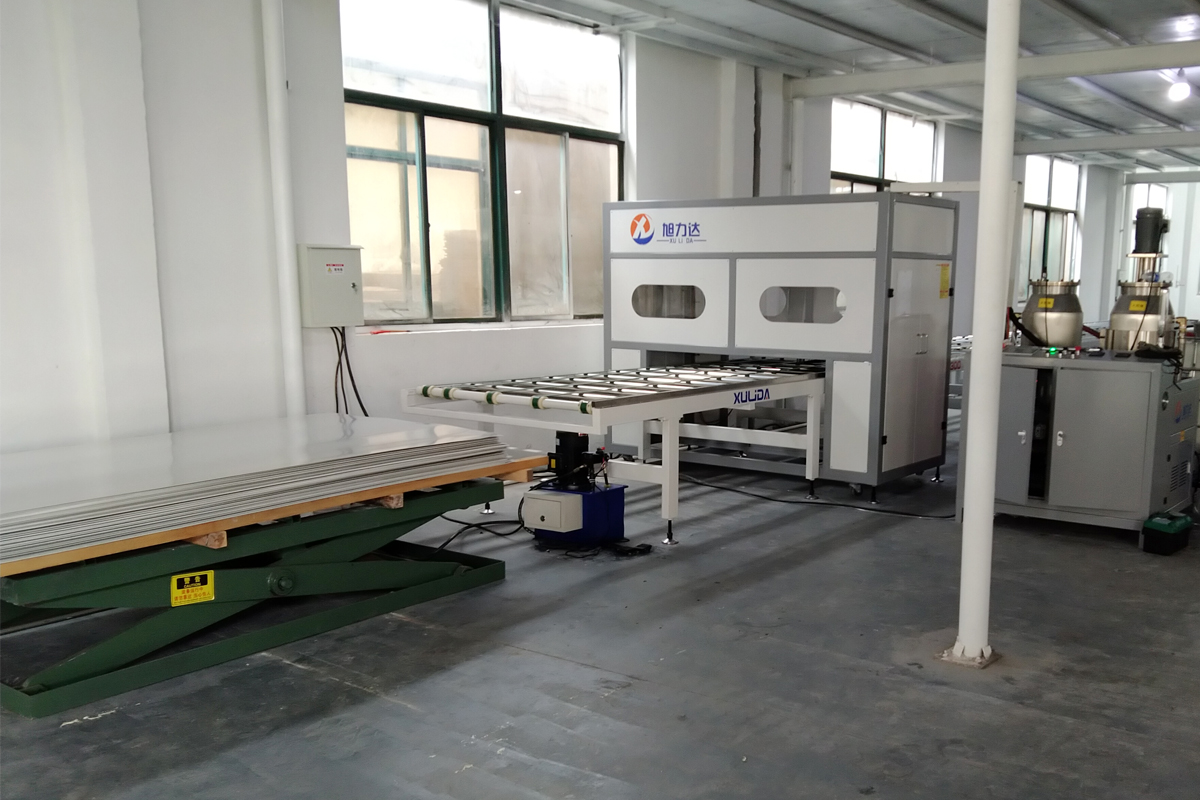 For which industries is the fully automatic glue-pouring mac
 Comprehensive Overview of Adhesive Lamination Equipment (Pro
 What is a composite panel production line?