 简体中文
简体中文

"What are the benefits of using refrigerated van panel composite processing equipment in the production of refrigerated trucks?"
Refrigerated van panel composite processing equipment is a core piece of machinery specifically designed for manufacturing "sandwich" composite panels. Its advantages are systematic—it not only improves product quality but also fundamentally transforms production methods.
· Improved panel quality and performance: Using a hot press for one‑shot molding ensures strong internal adhesion, high overall strength, and excellent surface flatness (tolerance ≤0.5 mm/m², or even 0.3 mm/m²). The finished panels are free from blisters and wrinkles, and offer low weight, high strength, superior thermal insulation, good airtightness, and corrosion resistance. The tight fitting of panels significantly enhances the sealing and insulation performance of the vehicle body.
· High precision and automation: CNC machining centers achieve positioning accuracy of ±0.03 mm. With program control, all operations—cutting, drilling, tapping, slotting, and milling—are completed in a single clamping setup, eliminating errors from repeated clamping. Operators simply input dimensions for automatic production, and high‑end models support IoT remote monitoring.
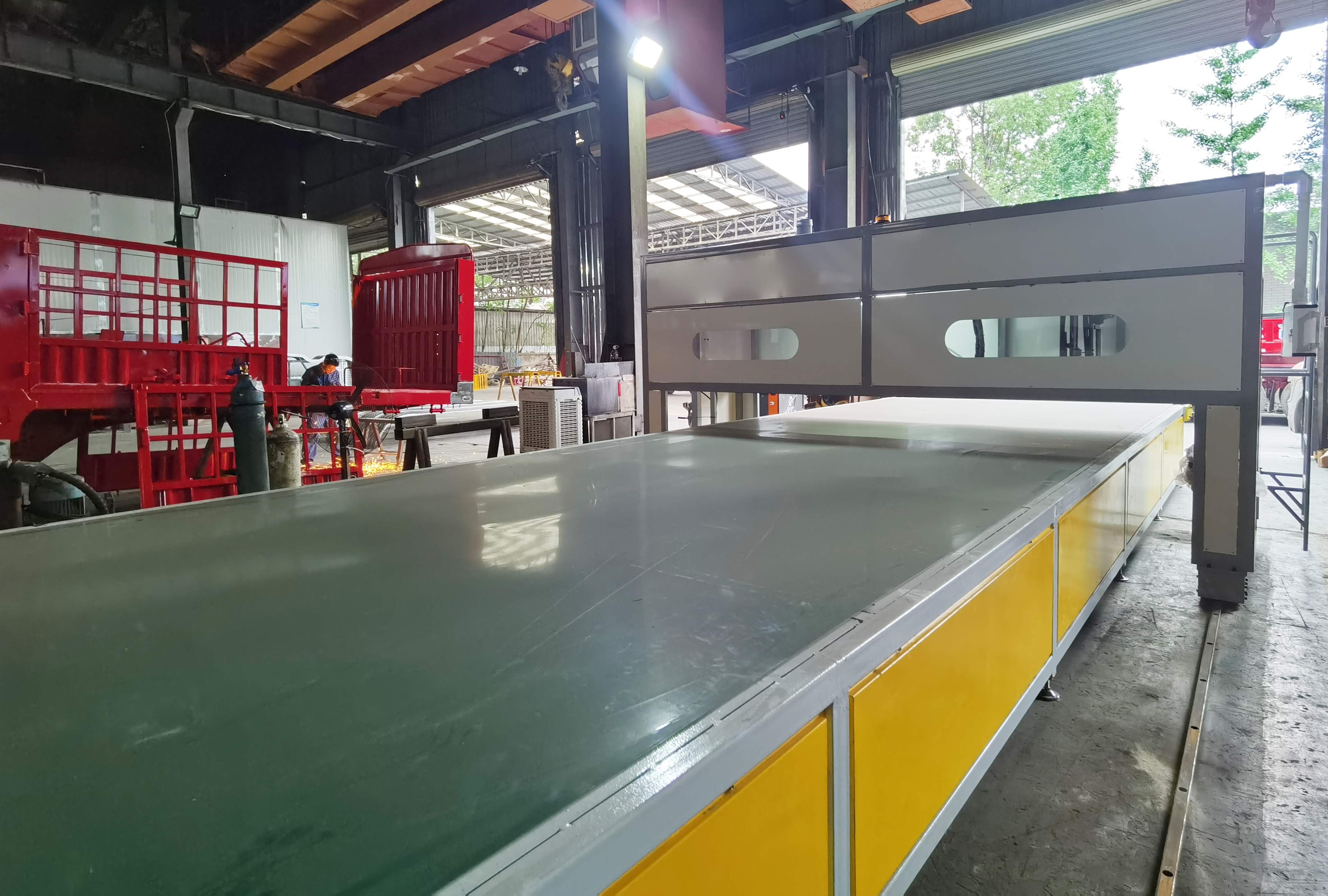
· Greatly improved production efficiency: A hot press can produce one mold in as little as 2 hours, and a skilled worker can easily complete 4–5 molds per day. With the introduction of machining centers, case studies show that production line staff can be reduced from 8 to 2 people, while efficiency increases by more than three times.
· Significantly reduced overall costs: Automated production reduces reliance on manual labor and lowers labor intensity. High‑precision machining minimizes material waste, while one‑shot molding cuts rejection rates and subsequent repair costs. The equipment has low total power and energy consumption, and some materials can be recycled and reused.
· Flexibility and strong adaptability: The equipment can handle different sizes (up to over 17 meters in length) and a variety of materials (e.g., FRP, aluminum, stainless steel for skins; polyurethane, XPS, etc. for cores). In addition to refrigerated vans, it can also be used to produce RVs, containers, cold‑storage panels, and more.
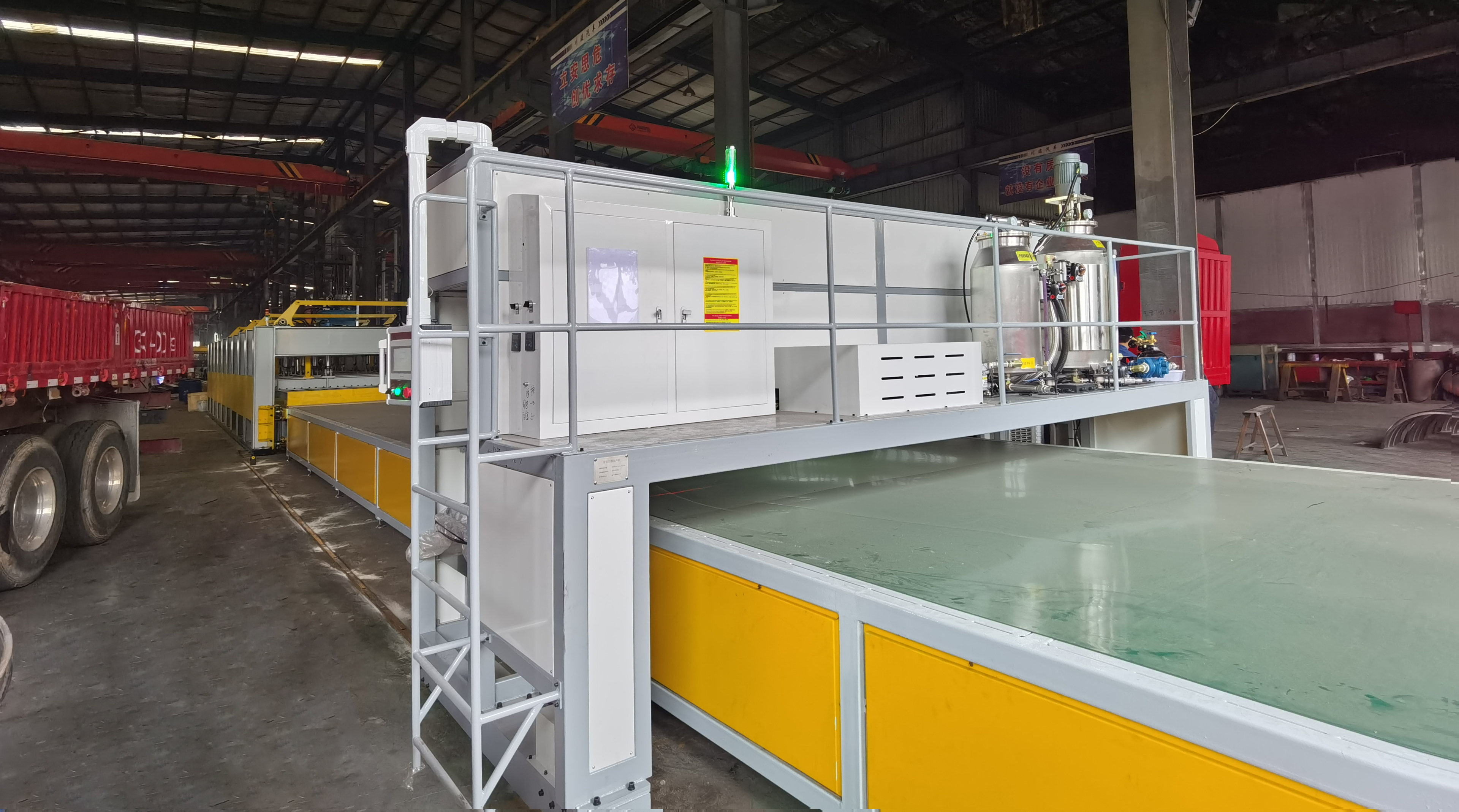
In summary, with its multiple advantages—improved panel quality, high‑precision automation, greatly enhanced efficiency, and lower overall costs—this equipment has become the core enabler for modern refrigerated vehicle manufacturing upgrades.
 Roundup of Major News in the Sheet Composite Equipment Indus
 Technology Upgrading Accelerates, Green Smart Manufacturing
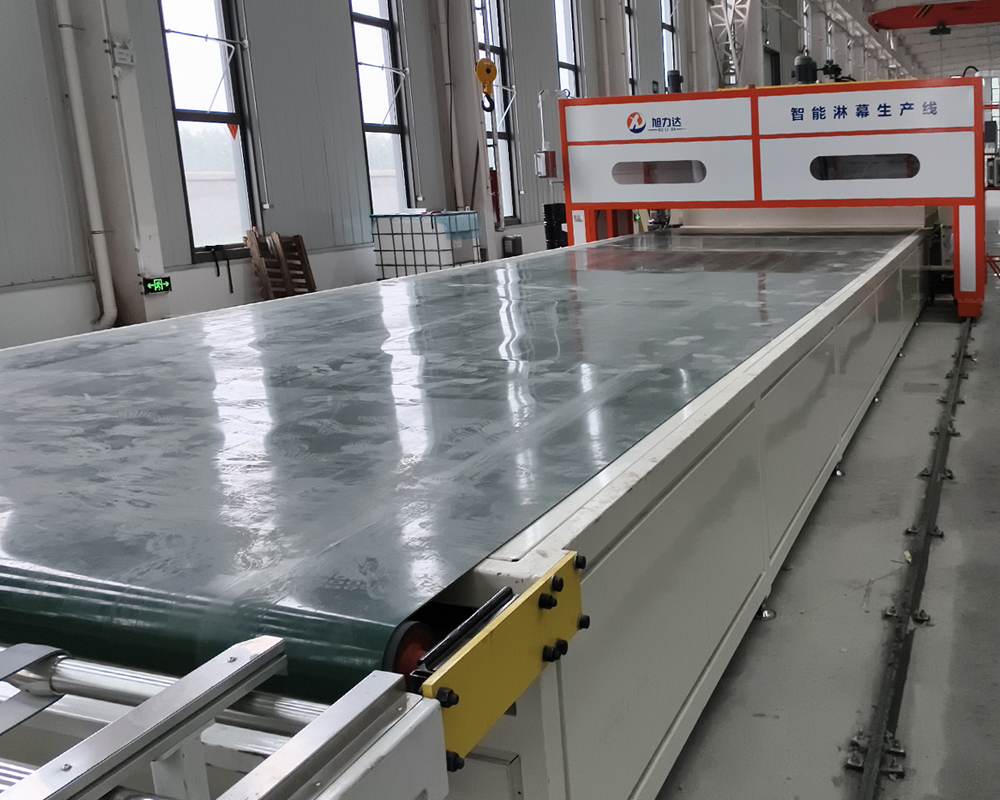 What is a curtain coating machine?
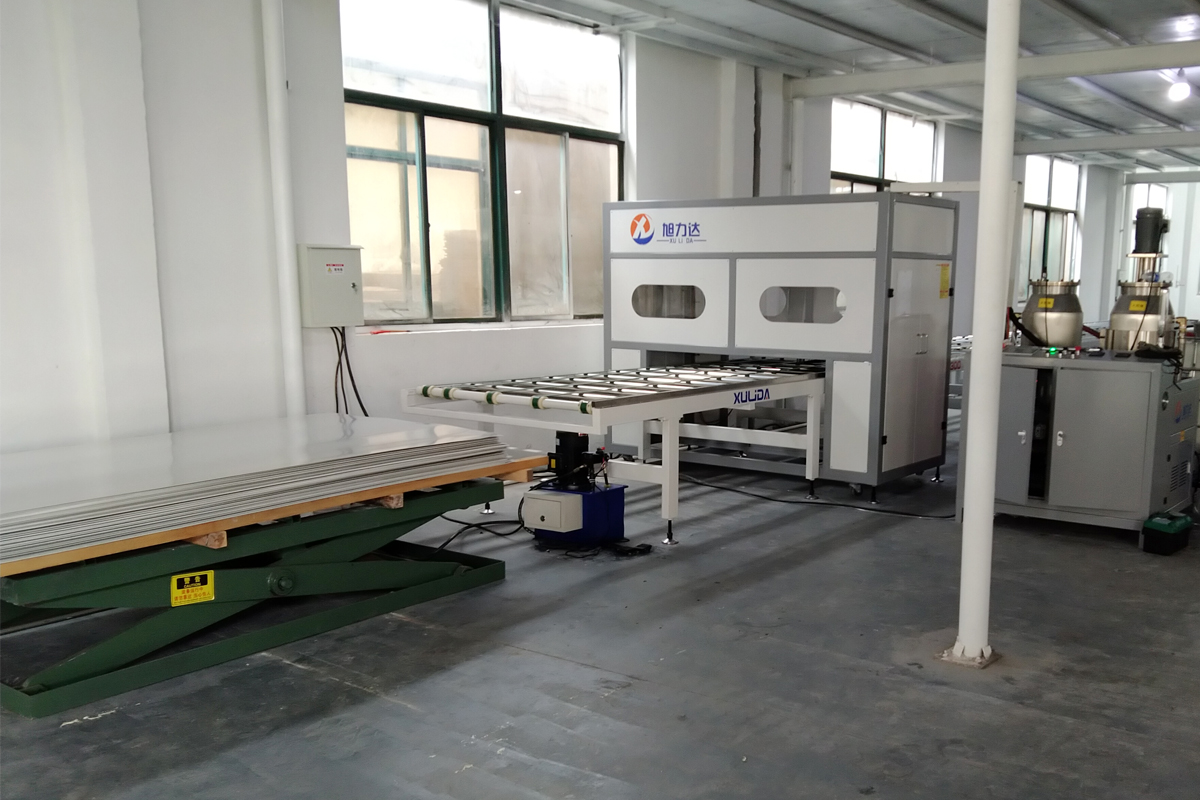 For which industries is the fully automatic glue-pouring mac