 简体中文
简体中文

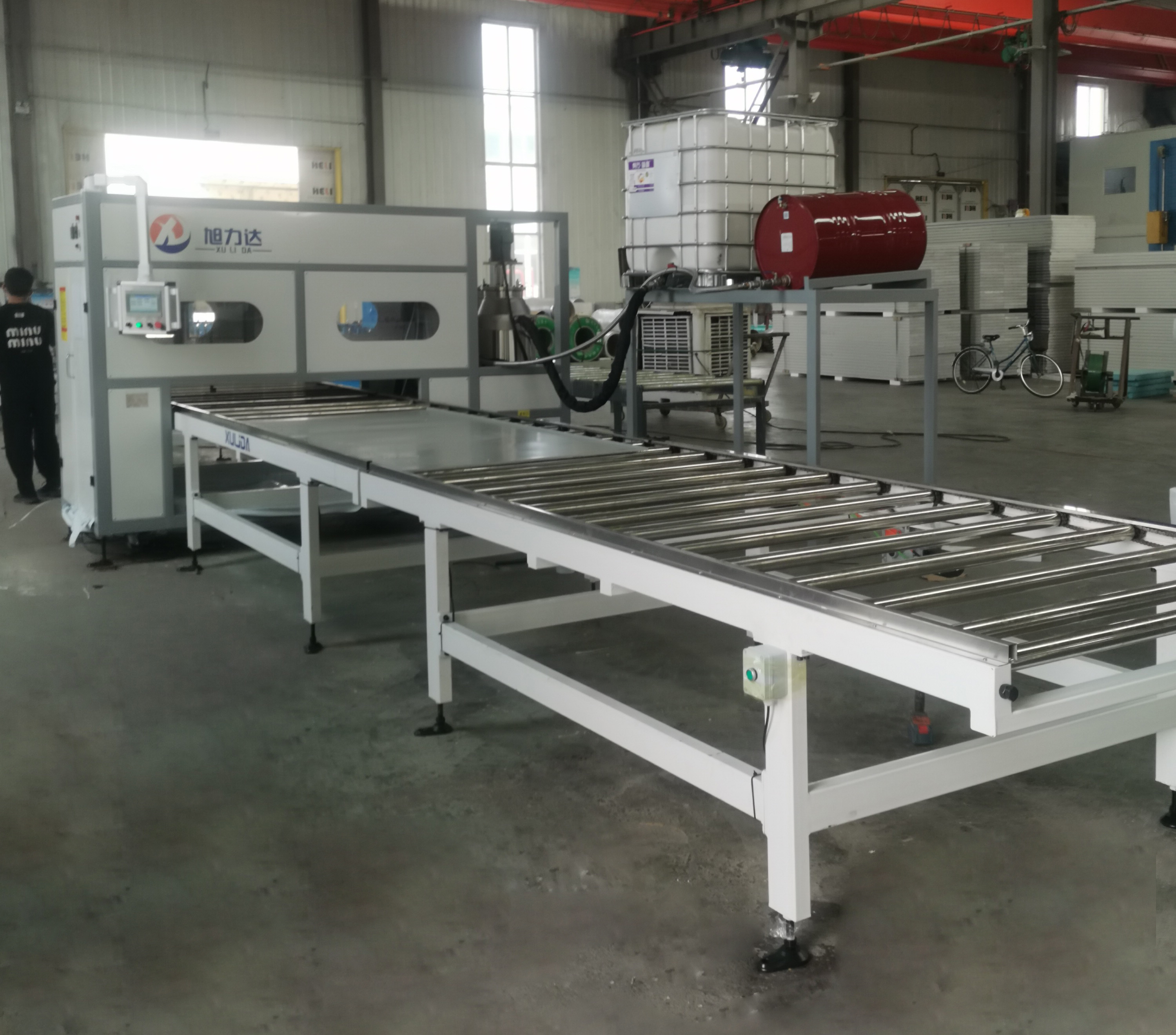
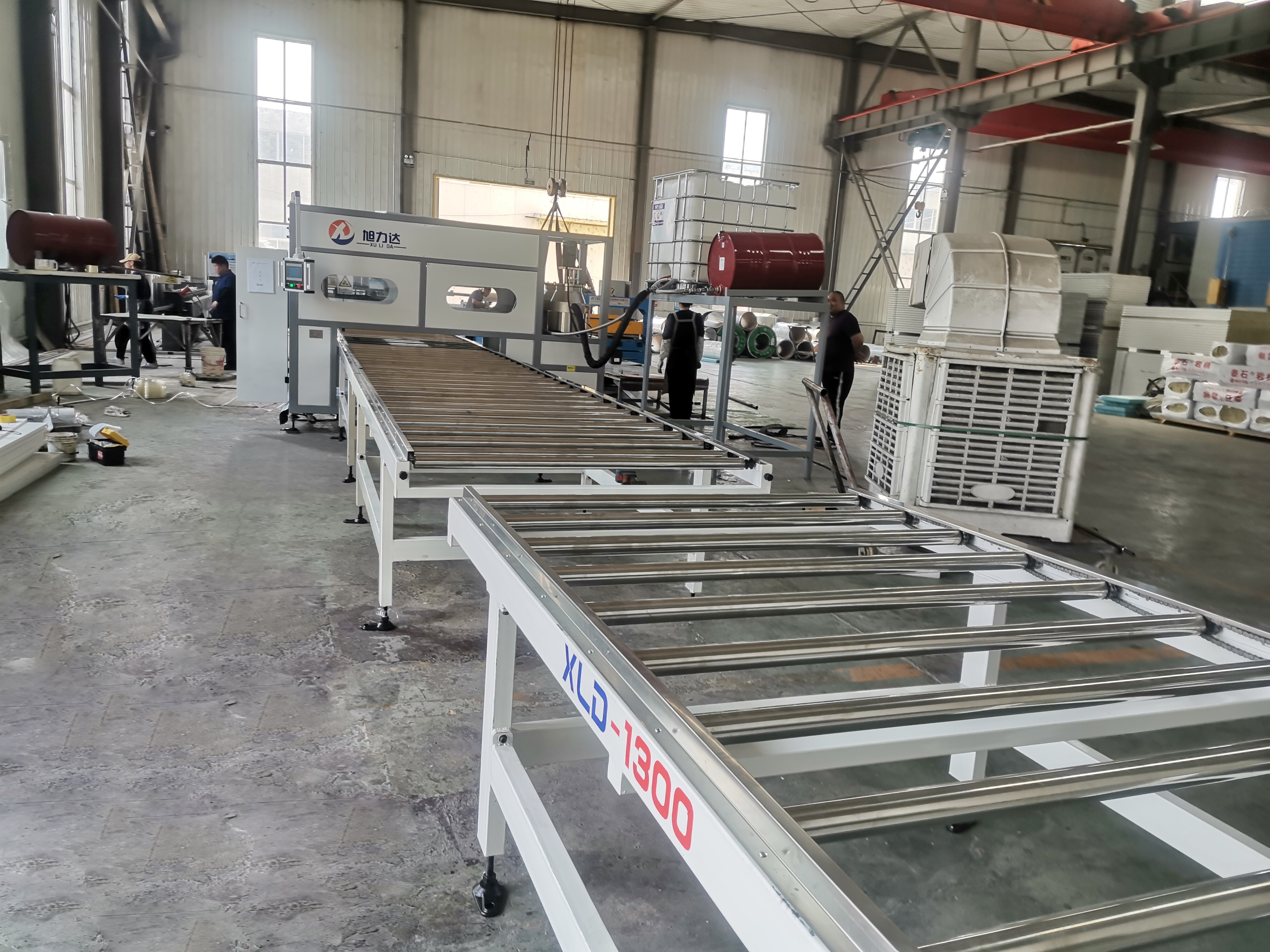
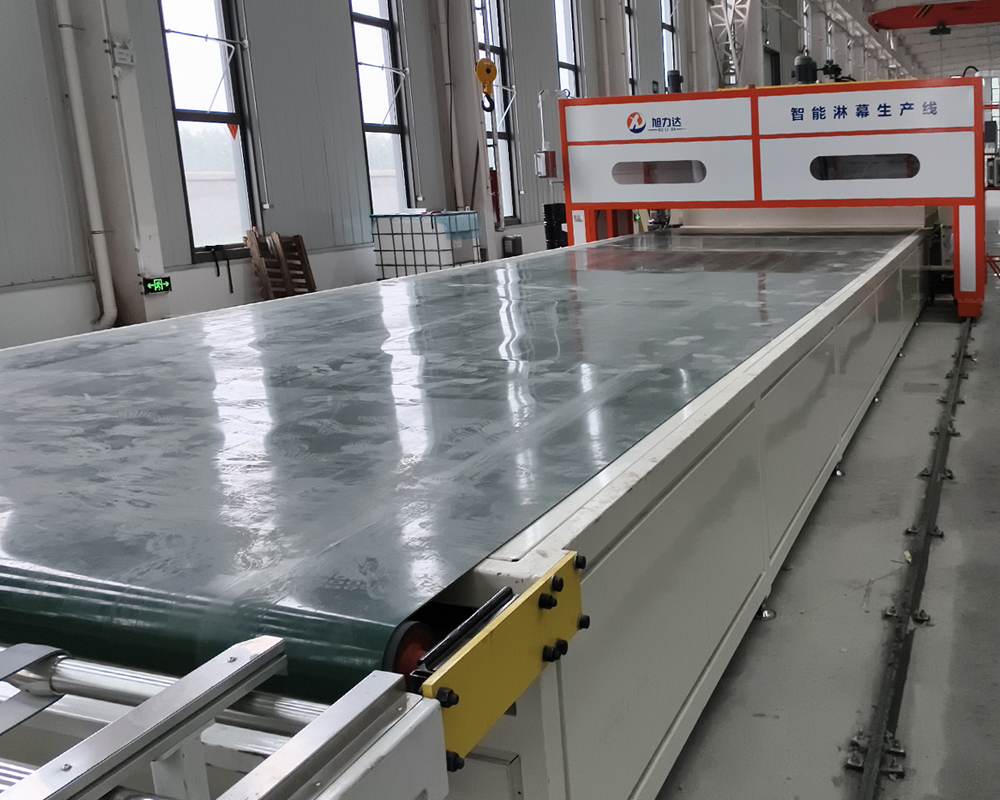
For which industries is the fully automatic glue-pouring machine suitable?
Thanks to features such as precise adhesive control, efficient coating, and a high degree of automation, automatic adhesive curtain coating machines are widely used in industries requiring adhesive application—whether on material surfaces or between layers—and are particularly well-suited for large-scale, continuous production environments. Key industries and specific applications include:
1. Building Materials and Panel Processing
Production of integrated exterior wall insulation and decoration panels: During the lamination of insulation layers (e.g., rock wool, EPS) with decorative panels (e.g., calcium silicate boards, metal sheets), the machine applies adhesives like polyurethane or epoxy resin evenly, ensuring strong interlayer bonding and preventing issues such as hollow spots or delamination.
Engineered wood manufacturing: Used for surface coating or interlayer bonding in plywood, fiberboard, and particleboard production (e.g., applying adhesive when laminating multi-layer wood boards); this ensures uniform adhesive thickness and enhances the structural strength of the panels.
Fire-resistant and decorative board processing: Applies fire-retardant, moisture-proof, or decorative adhesive layers to substrate surfaces, serving both protective and aesthetic functions.
2. Furniture and Home Furnishings
Panel furniture production: Applies adhesive to the joints or surfaces of furniture panels and sideboards for processes such as veneering (e.g., wood veneer, PVC film) and edge banding; this replaces manual application, reduces adhesive waste, and improves bonding flatness.
Cabinets and bathroom fixtures: Applies sealants or waterproof adhesives to metal or plastic substrates, enhancing the product's water and corrosion resistance.
3. Packaging and Printing
Carton and box processing: Applies starch-based or hot-melt adhesives to joints in corrugated cardboard or paperboard during box forming or lamination processes, improving bonding efficiency and sealing integrity.
Packaging film lamination: Applies laminating adhesives to materials like plastic film or aluminum foil to bond multiple film layers (e.g., for food packaging), ensuring a bubble-free and uniform bond.
4. Automotive and Rail Transit
Interior component production: Applies specialized adhesives to composite substrates (e.g., leather, fabric, and plastic panels) for automotive door panels and dashboards, ensuring secure bonding and enhancing the durability of the interior. Soundproofing and thermal insulation lamination: Adhesive is applied via curtain coating between automotive soundproofing material and metal panels to enhance interlayer bonding and optimize sound insulation performance.
5. New Energy and Electronics Industries
Lithium battery processing: Insulating and bonding adhesives are curtain-coated onto battery electrode sheets and separator surfaces to ensure structural stability of the electrodes and enhance battery safety.
Electronic component encapsulation: Moisture-resistant and thermally conductive adhesives are curtain-coated onto circuit boards and electronic modules to provide protection and heat dissipation.
6. Leather and Textile Industries
Artificial and synthetic leather production: Polyurethane or PVC adhesives are curtain-coated onto base fabrics to form a uniform film, simulating the texture of natural leather while improving wear resistance.
Textile coating: Waterproof and flame-retardant adhesives are curtain-coated onto fabrics to impart specific functional properties (e.g., waterproofing for outdoor tent fabrics).
7. Medical Device Industry
Medical dressing production: Medical-grade adhesives or ointments are curtain-coated onto gauze or non-woven fabrics, ensuring uniform application, proper adhesion, and stable therapeutic efficacy.
Medical equipment components: Antimicrobial and sealing adhesives are curtain-coated onto plastic or metal parts to meet medical-grade hygiene and protection standards.
8. Composite Materials Industry
Fiberglass (FRP) products: Resin adhesive is curtain-coated onto fiberglass cloth; subsequent curing and molding produce FRP sheets, pipes, and other components, ensuring uniform resin distribution and enhanced material strength.
Honeycomb and sandwich panel production: Adhesive is curtain-coated between the honeycomb core and the facing panels to achieve efficient lamination, creating lightweight, high-strength materials for aerospace, construction, and other sectors.
The core advantage of automatic curtain coating machines lies in their ability to handle large-area, continuous coating requirements while precisely controlling adhesive layer thickness (typically within the 0.01–1 mm range) and minimizing adhesive waste. Consequently, they are widely used in industries requiring mass production with high standards for coating precision and efficiency. When selecting equipment, parameters should be matched to the adhesive type (water-based, solvent-based, hot-melt, etc.), substrate characteristics (material, flatness), and production capacity requirements.
 Iterative advancements in adhesive application technology an
 Roundup of Major News in the Sheet Composite Equipment Indus
Technology Upgrading Accelerates, Green Smart Manufacturing
Roundup of Major News in the Sheet Composite Equipment Indus
Technology Upgrading Accelerates, Green Smart Manufacturing
 What is a curtain coating machine?