 简体中文
简体中文
Pain Points and Solutions in Stone Composite Lamination Process
Stone composite panels (typically referring to the lamination of natural stone with substrates such as aluminum honeycomb, ceramic tiles, or insulation materials) are widely used in modern architecture. They retain the decorative appeal of natural stone while offering advantages such as being lightweight, high-strength, and thermally insulating. However, the production process is complex, and any oversight in detail can significantly impact the final product quality and cost.
Outlined below are five common pain points in the stone composite lamination process, along with their corresponding solutions:
1. Insufficient Bond Strength and Delamination
Pain Point Analysis:
This is the most critical and frequently encountered quality issue. It manifests as the stone layer peeling or separating from the substrate (e.g., aluminum honeycomb, tile, insulation board) during use. Primary causes include:
· Incorrect Adhesive Selection: Poor compatibility between the adhesive and the stone or substrate, or the adhesive itself lacking sufficient bond strength.
· Inaccurate Mixing Ratio: For two-component adhesives (e.g., epoxy AB glue), an imprecise mixing ratio leads to degraded adhesive properties and incomplete curing.
· Uneven or Insufficient Adhesive Application: Patchy adhesive coverage, blank spots, or entrapped air bubbles result in an inadequate bonding area.
· Improper Surface Preparation: Dust, oil, release agents, or moisture on the stone's backside and the substrate surface create a barrier layer, preventing proper adhesive wetting and penetration.
Solutions:
1. Adhesive Selection and Validation: select specialized, proven structural adhesives (e.g., specific epoxy resins, polyurethane adhesives) based on the stone characteristics (density, backside roughness) and substrate type (aluminum, tile, foam). Conduct pull-off or destructive tests on small samples before mass production to confirm bond strength meets requirements.
2. High-Precision Metering and Mixing: Implement precision metering and mixing equipment to ensure the mixing ratio for two-component adhesives is controlled within ±1%, eliminating errors from manual mixing.
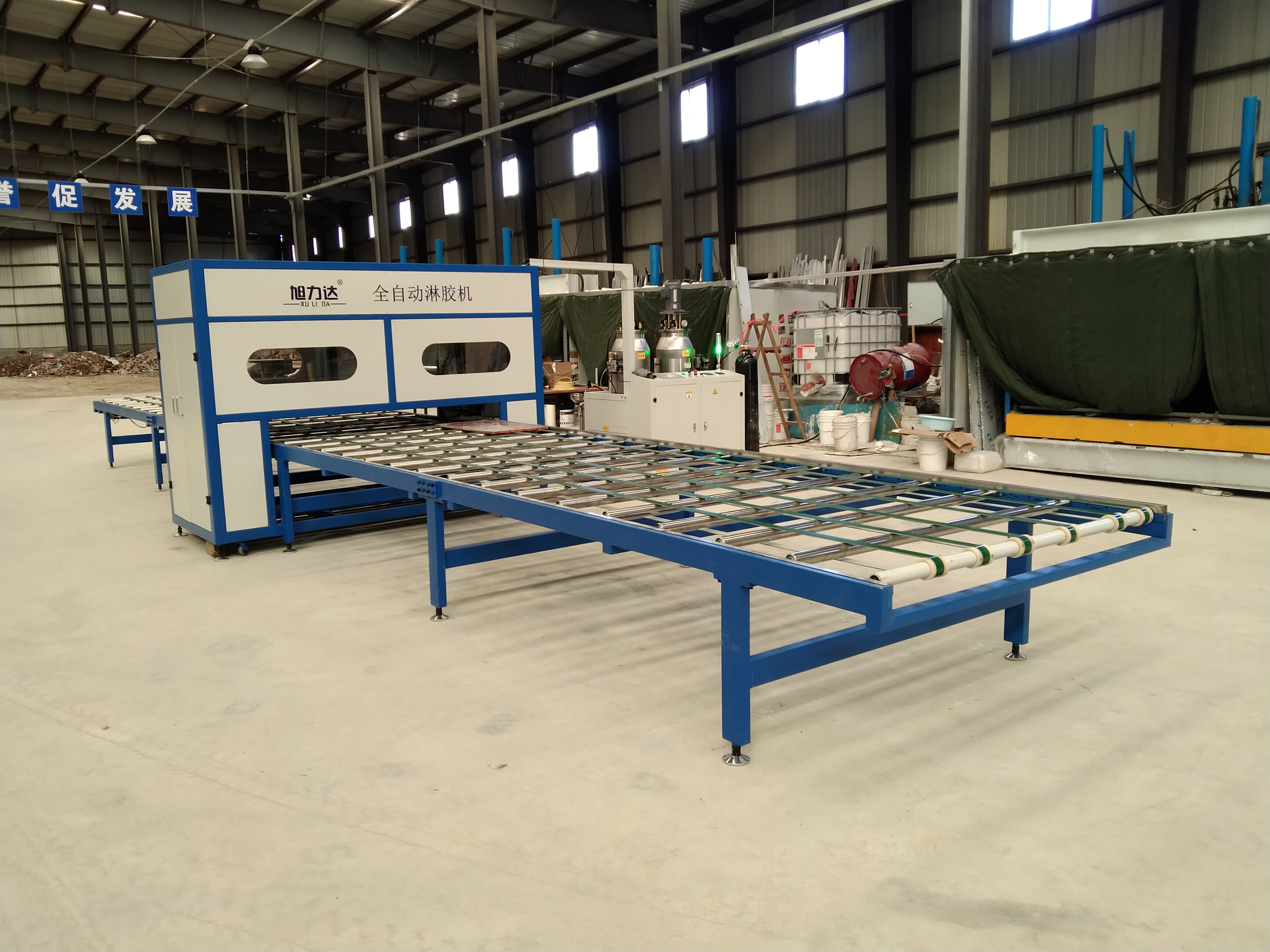
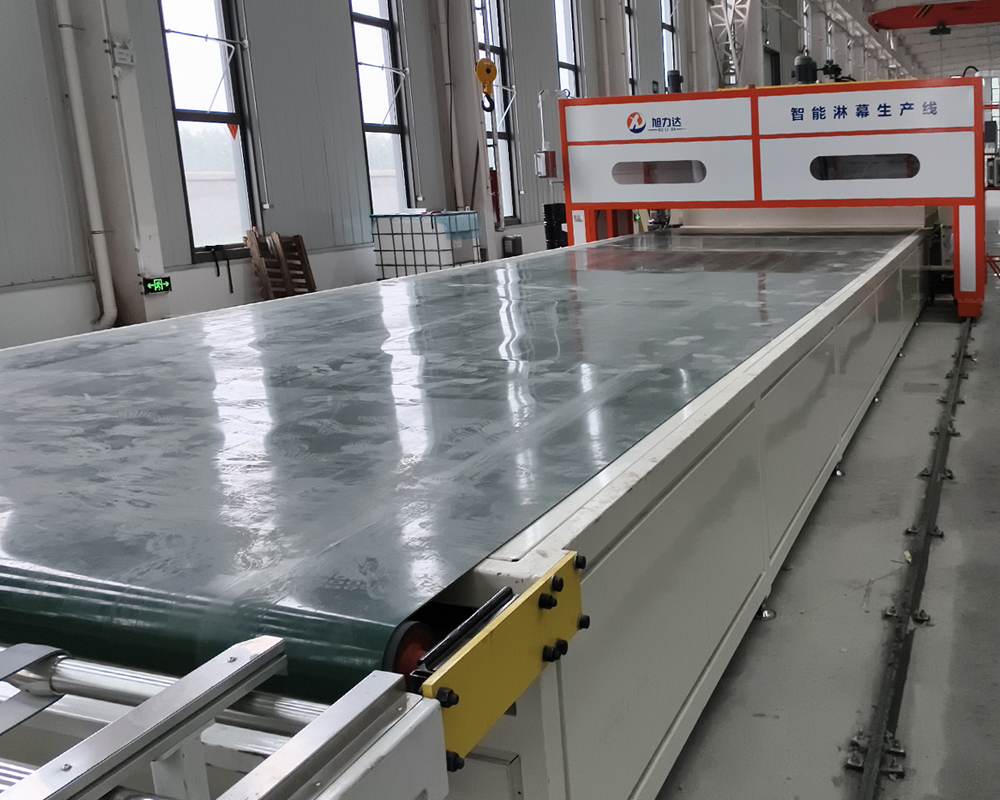
3. Optimize Adhesive Application: replace manual spreading with automated processes like curtain coating or roller coating. This ensures uniform coverage and precise control over adhesive thickness, preventing both starved joints and excessive glue lines.
4. Rigorous Surface Pre-Treatment: Thoroughly clean and dry the stone back and substrate before application. If necessary, apply a specialized primer to the stone back to enhance adhesion, or roughen metal substrates to improve mechanical interlock.
2. Fully Automatic Glue Spraying Machine Panel Deformation and Warping
Pain Point Analysis:
Finished panels become bent or warped, making them impossible to install flat. This is mainly due to:
· Imbalanced Internal Stresses: Significant differences in the coefficient of thermal expansion between the stone and substrate generate internal stress with temperature fluctuations. High adhesive shrinkage during curing or an asymmetrical composite structure exacerbates warping.
· Adhesive Shrinkage: Volume shrinkage of the adhesive during curing creates shrinkage stress, pulling the panel out of shape.
· Improper Curing Conditions: Curing temperatures that are too high or low, or excessively rapid heating or cooling, lead to stress concentration.
Solutions:
1. select Low-Shrinkage Adhesives: Prioritize epoxy structural adhesives with low curing shrinkage to minimize stress generation at the source.
2. Optimize Composite Structure Design: Employ symmetrical designs where possible. For example, bond a balancing layer of similar material to the opposite side of a thin stone honeycomb panel to counteract stresses.
3. Apply Uniform, Constant Pressure: During the lamination pressing phase, use large-scale platen presses to apply uniform, constant pressure across the panel. This ensures tight bonding and effectively restrains deformation until the adhesive reaches its initial cure strength.
4. Control Curing Process: Follow the adhesive manufacturer's curing curve precisely, allowing panels to cure in a controlled temperature and humidity environment, avoiding rapid temperature fluctuations.
3. Fully Automatic Glue Spraying Machine Surface Staining and Adhesive Bleed-Through
Pain Point Analysis:
For natural stones, especially light-colored, cracked, or porous varieties, components of the adhesive (like color pigments in epoxy) can penetrate to the stone surface, creating unsightly shadows or stains that are difficult to remove, severely impacting the decorative finish.
Solutions:
1. Pre-Treat Stone Back Surface: Apply a dedicated stone sealer to the back of the stone before adhesive application. This effectively seals the surface pores, creating a barrier layer that prevents adhesive penetration.
2. Control Adhesive Viscosity and Open Time: Choose adhesives with appropriate viscosity (not prone to running) and strictly control the open time after application to prevent excessive adhesive soak-in before pressure is applied.
3. Optimize Application Method: Use roller or curtain coating for more precise control over the amount of adhesive applied, preventing glue from pooling excessively and seeping through edges or porous areas.
4. Voids (Air Pockets) and Bubbles in the Glue Line
Pain Point Analysis:
Tapping tests on finished panels may reveal hollow sounds in localized areas, indicating the presence of voids. These areas lack effective bonding, compromising strength and posing a future risk of delamination. Bubbles typically result from air entrapped during adhesive mixing or an inability for air to escape during pressing.
Solutions:
1. Dynamic Mixing and Vacuum Degassing: Use dynamic mixer tubes to ensure thorough mixing while minimizing air entrapment. For extremely high-quality requirements, perform vacuum degassing on the mixed adhesive.
2. Optimize Pressing Method: Introduce panels into the press at a slight angle or apply pressure from the center outwards during lamination. This facilitates the smooth escape of air from the panel edges.
3. Apply Adhesive in a Grid Pattern: For large, flat panels, use a grid-like application path during curtain coating. When pressure is applied, the adhesive spreads, and the empty grid channels provide a pathway for trapped air to escape.
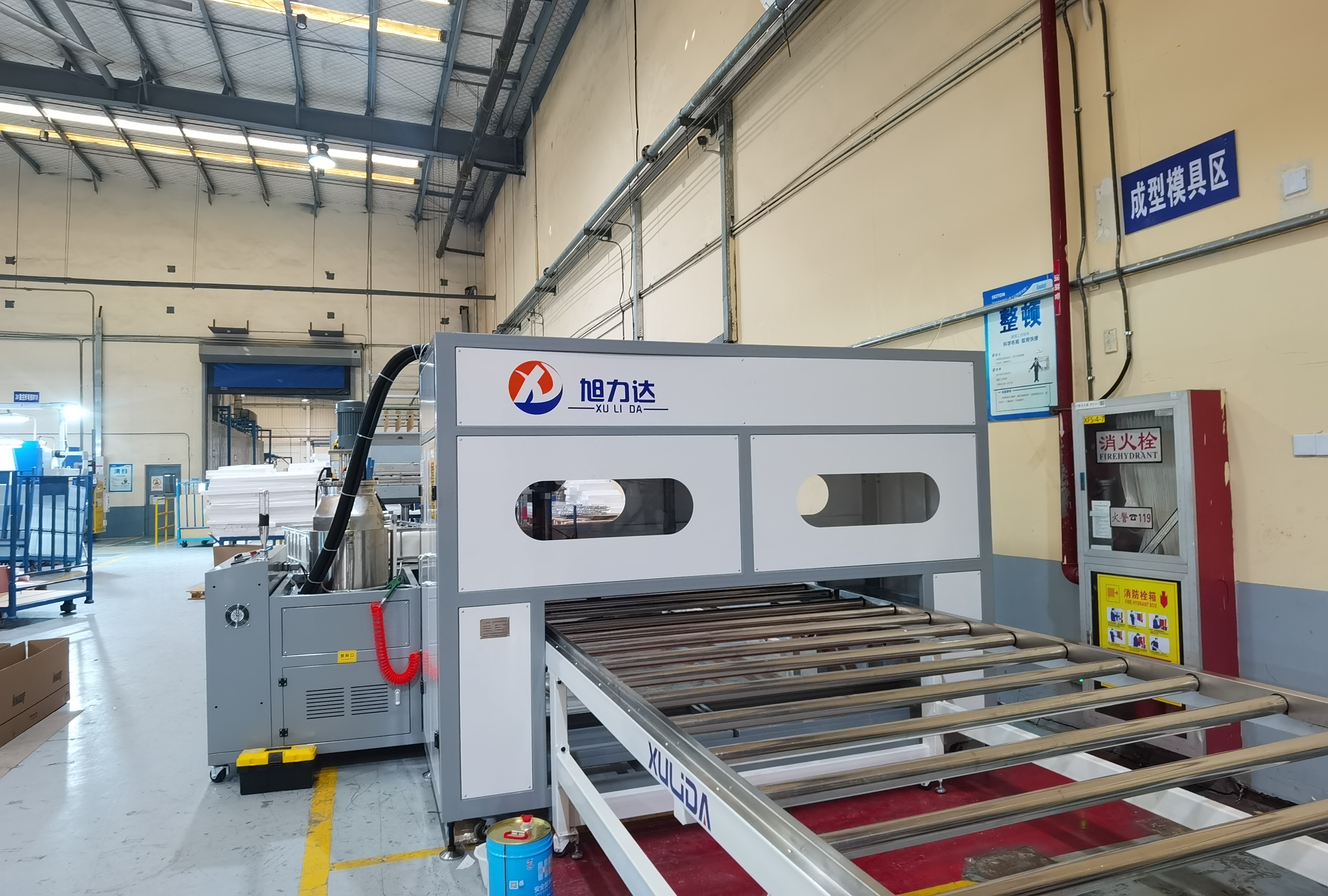
5. Fully Automatic Glue Spraying Machine Low Automation Level and Production Throughput Bottlenecks
Pain Point Analysis:
Traditional manual processes for adhesive application, panel handling, and stacking are not only labor-intensive and inefficient but also make product quality heavily reliant on worker skill and consistency, leading to poor batch-to-batch stability. Furthermore, the limited working life of adhesives can lead to material waste with manual operations.
Solutions:
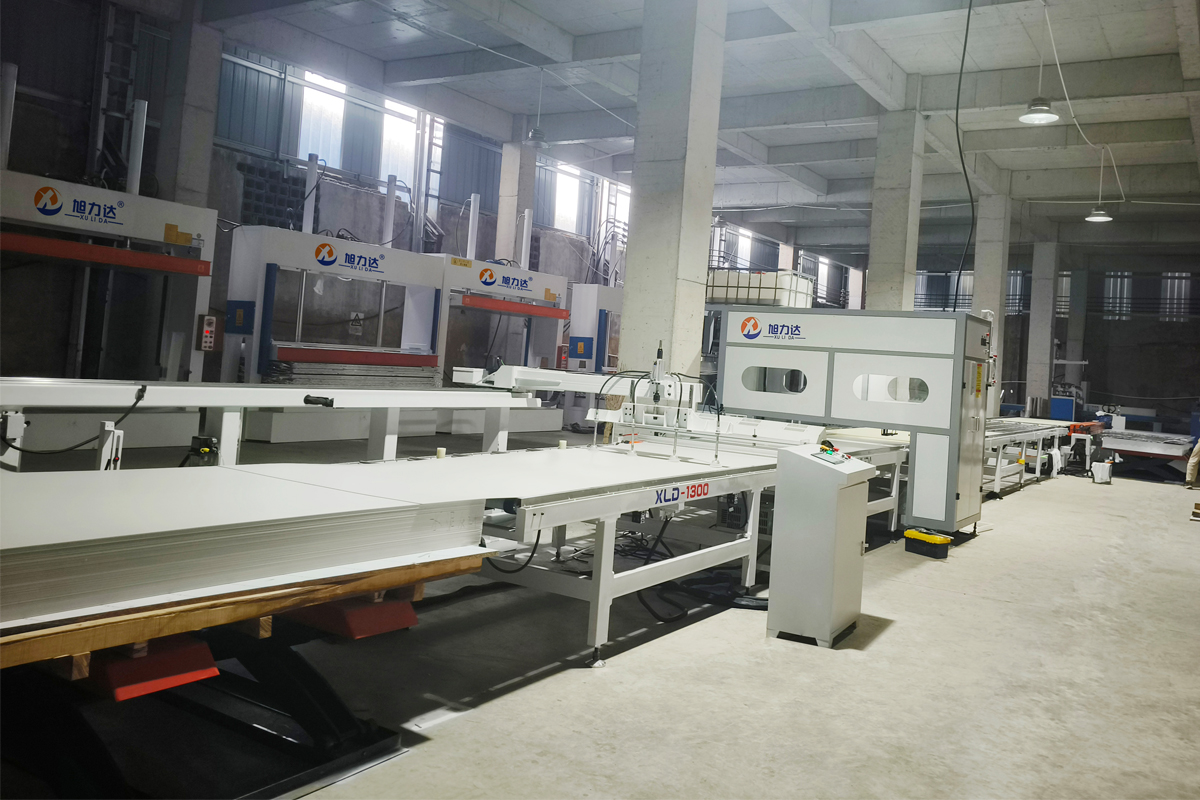
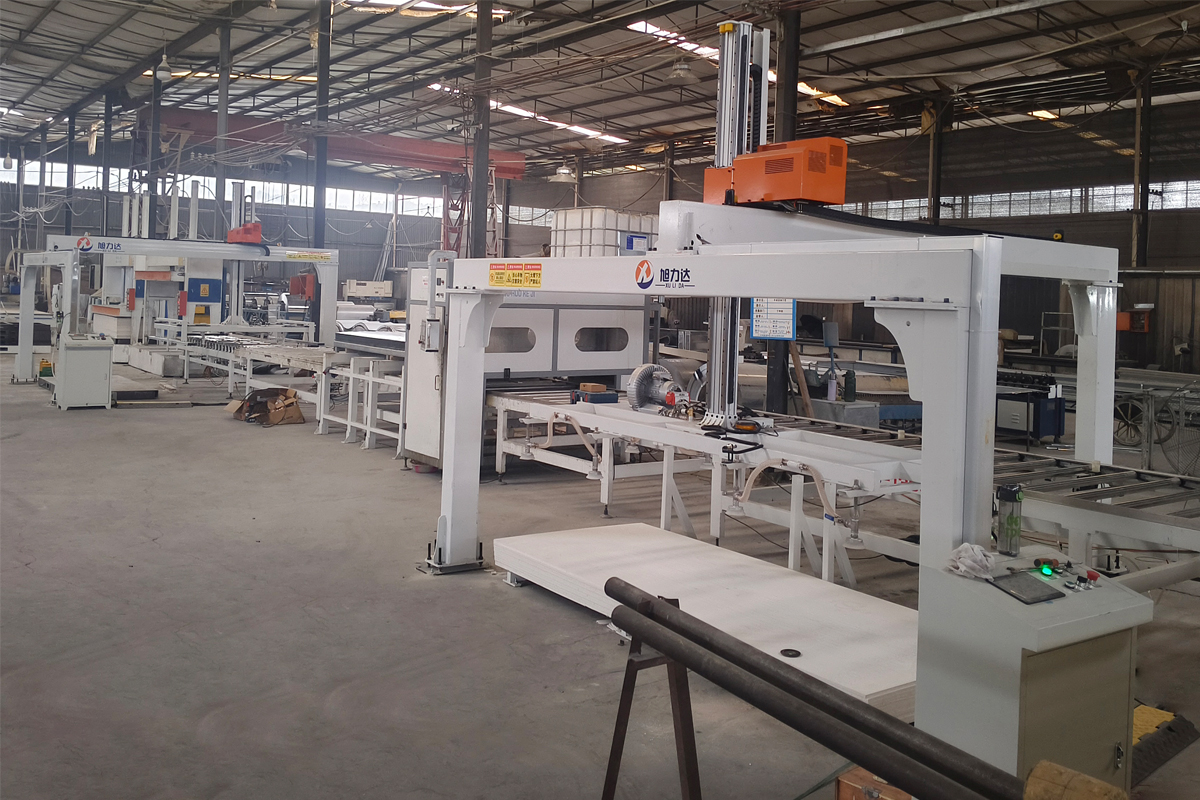
1. Implement Automated Production Lines: Establish a continuous, in-line process encompassing automatic feeding, automatic adhesive application (curtain coating), automatic panel lay-up, automatic pressing, and automatic stacking.
2. Automate Critical Processes: Focus on automating the adhesive application and pressing stages. Using gantry or cantilever-type automatic curtain coaters allows precise control over adhesive volume and application path, achieving efficiency many times higher than manual methods. Combine this with multi-daylight hot presses or continuous presses for rapid curing and high-volume production.
3. Centralized Control System: Employ a PLC-based centralized control system to coordinate the speed, temperature, pressure, and adhesive output of the entire production line. This ensures consistent process parameters across different batches, achieving standardized production.
In summary, advancing stone composite lamination technology hinges on precise adhesive control and process automation. Through high-accuracy metering, uniform application, scientifically sound pressing methods, and rigorous surface preparation, common industry challenges like bond strength, deformation, and bleed-through can be effectively resolved. This ultimately enables a dual breakthrough in product quality and production efficiency.
 Iterative advancements in adhesive application technology an
 Roundup of Major News in the Sheet Composite Equipment Indus
Technology Upgrading Accelerates, Green Smart Manufacturing
Roundup of Major News in the Sheet Composite Equipment Indus
Technology Upgrading Accelerates, Green Smart Manufacturing
 What is a curtain coating machine?