 简体中文
简体中文

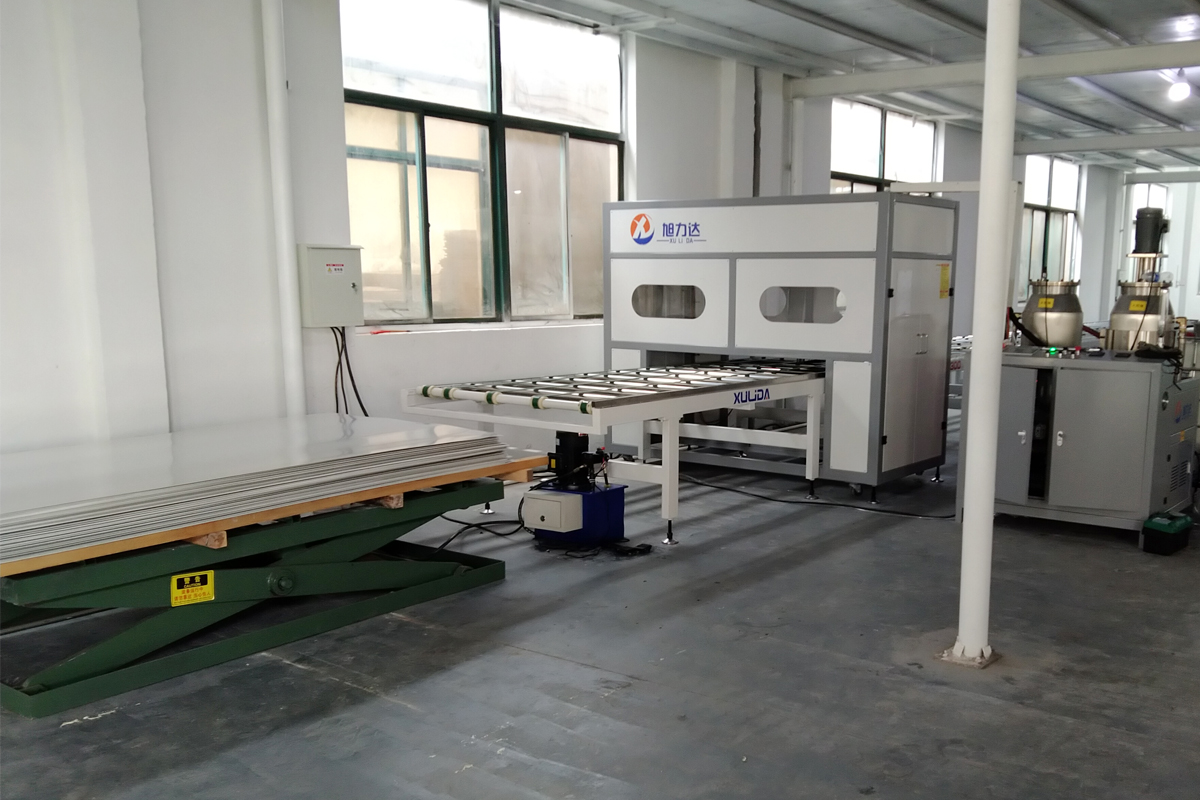
What is a panel lamination production line?
A panel lamination production line is Fully Automatic Glue Spraying Machine an automated manufacturing system that combines two or more materials with different properties—such as metal, plastic, wood, or fire-resistant cores—through continuous processes including adhesive coating, heating, pressing, and curing, to form a new type of panel that leverages the advantages of each layer.
Its primary purpose is to achieve complementary performance, with common applications including:
· Metal composite panels: such as aluminum-plastic panels and fire-resistant panels. These combine the strength of metal with the thermal insulation and fire resistance of core materials like rock wool or polyurethane, and are widely used in building facades and curtain walls.
· Wood-based composite panels: such as engineered multi-layer wood and overlaid panels. By bonding valuable wood veneers with plywood substrates, they retain the aesthetic of solid wood while improving dimensional stability and reducing the risk of warping or cracking.
· Industrial and decorative composites: such as film-coated metal panels and honeycomb panels. Functional layers—such as wear-resistant, anti-corrosive, antimicrobial, or decorative finishes—are added to meet specific requirements in applications like appliances, vehicle interiors, and high-end fit-outs.
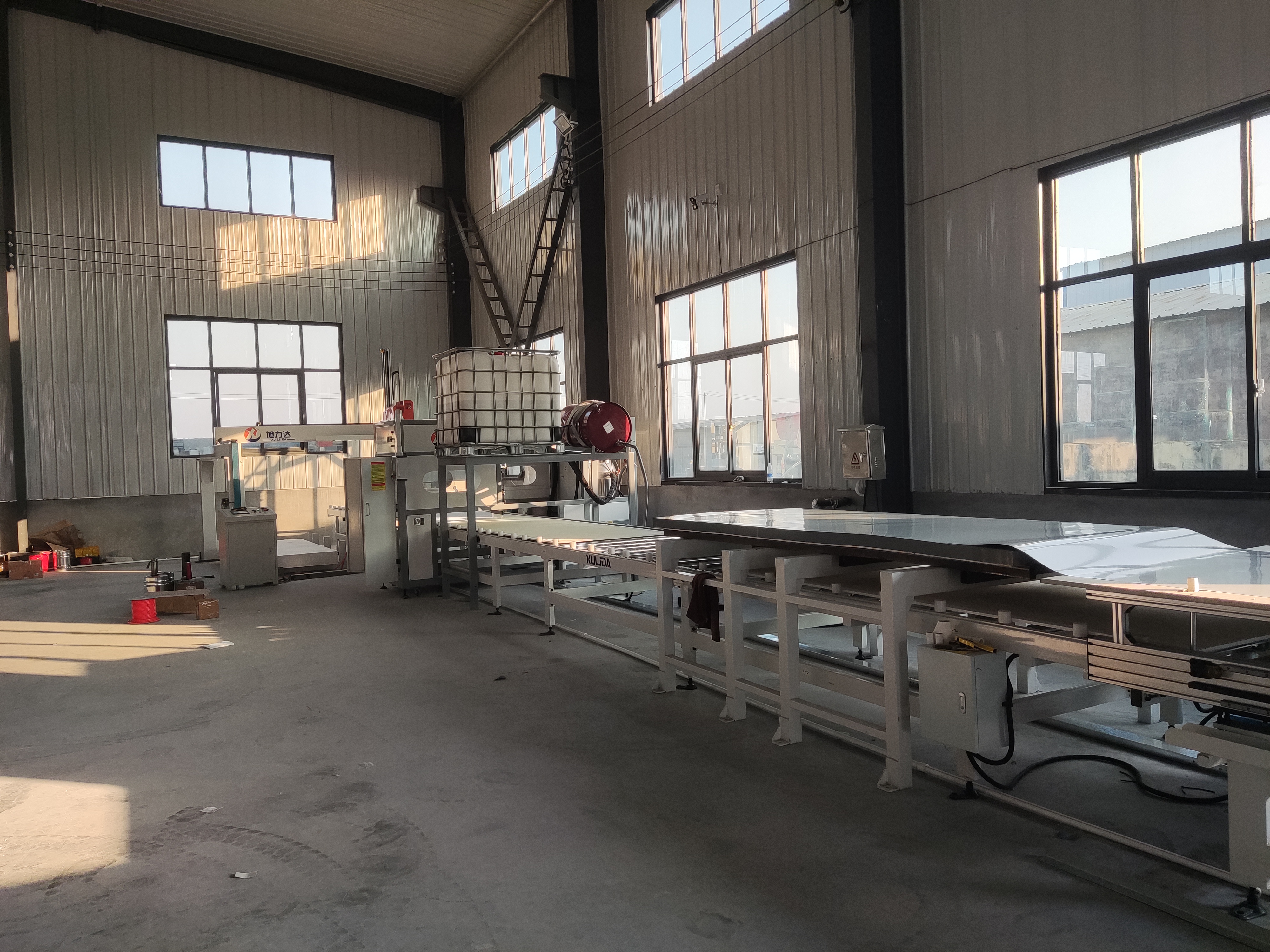
The production line typically consists of modules including uncoiling/feeding, surface treatment, adhesive coating and lamination, pressure curing, precision cutting, and finished product stacking. Key technical challenges lie in achieving interfacial bond strength between dissimilar materials (e.g., preventing delamination caused by differences in thermal expansion coefficients) and maintaining process precision throughout the entire line.
 Roundup of Major News in the Sheet Composite Equipment Indus
 Technology Upgrading Accelerates, Green Smart Manufacturing
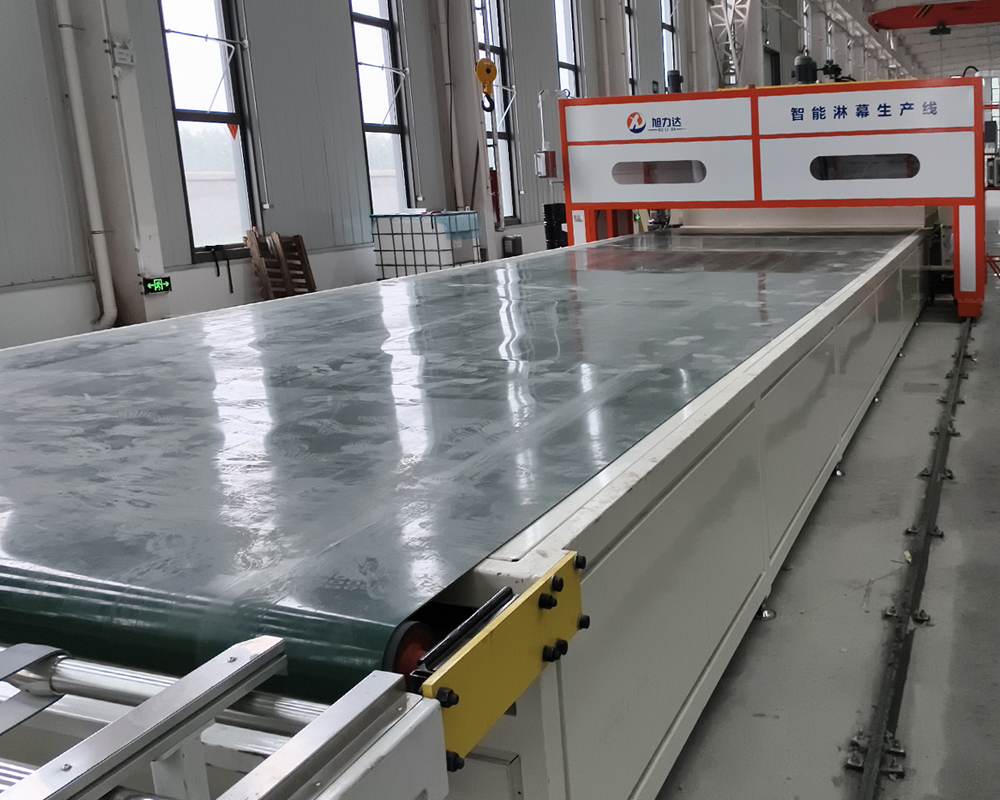 What is a curtain coating machine?
 For which industries is the fully automatic glue-pouring mac